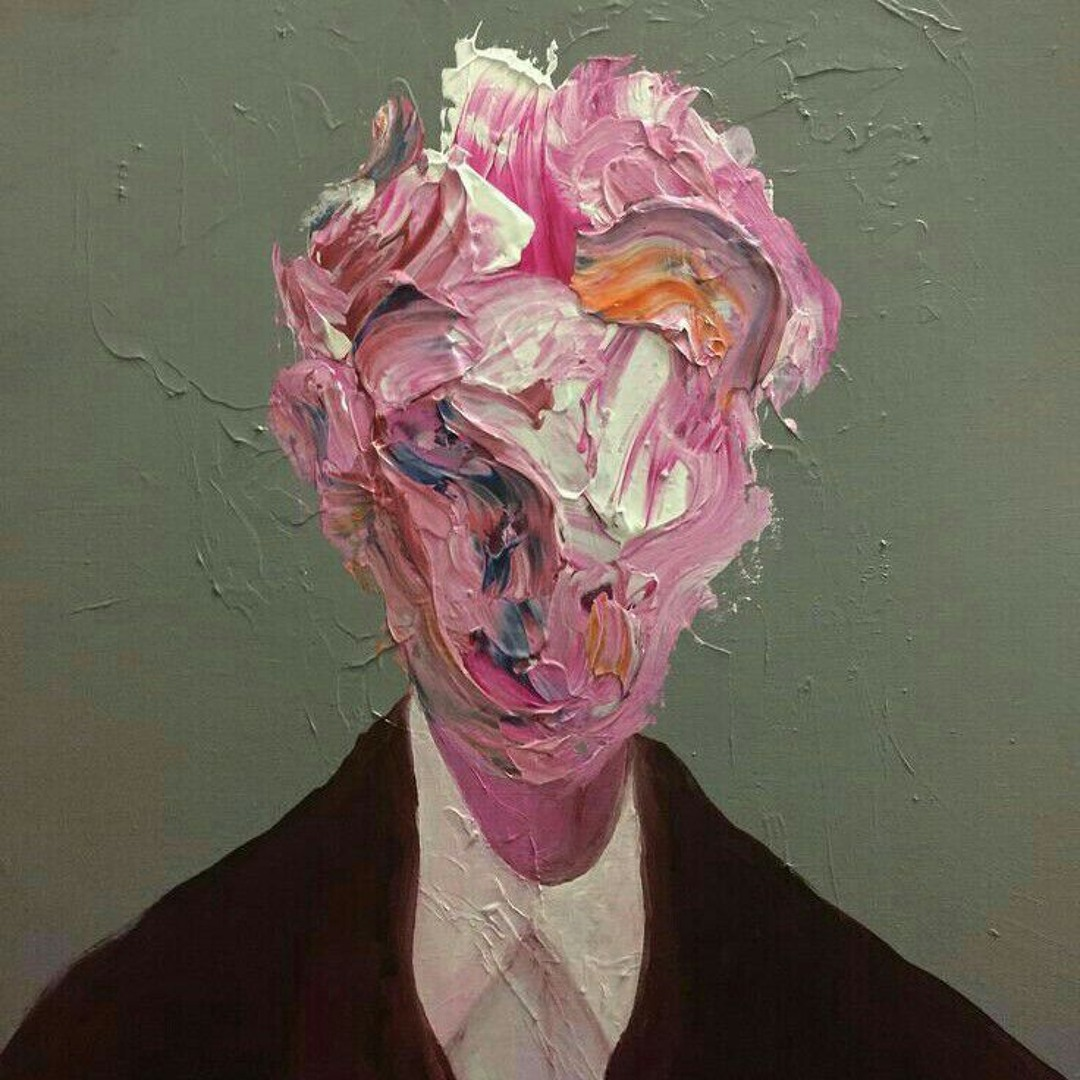
The Dehumanization of Art
In his seminal 1925 essay The Dehumanization of Art (La deshumanización del arte), Spanish philosopher José Ortega y Gasset provided a foundational framework for understanding modern, avant-garde art. He argued that the "new art" deliberately abandons relatable human emotions and realistic representations—a process he termed "dehumanization." Instead, it prioritizes pure form and aesthetic distance. This intentional opacity inevitably divides society, creating a cultural fracture between a minority capable of purely aesthetic contemplation and a majority who feel alienated and hostile toward art they cannot emotionally digest.[1]
Historical and Philosophical Context
Published in 1925, The Dehumanization of Art emerged during the height of European modernism. Ortega y Gasset was observing the rapid proliferation of avant-garde movements—such as Cubism, Expressionism, and Symbolism in the visual arts, and the compositions of Claude Debussy in music.[2]
For Ortega y Gasset, traditional 19th-century art (like Romanticism and Naturalism) was defined by its reliance on human emotional reality. People enjoyed traditional art because they could empathize with the human destinies, passions, and recognizable landscapes depicted within it. Modern art, however, severed these ties with the actual world, rejecting the idea that art should serve as a mirror for everyday human life.[3]
The Concept of "Dehumanization"
"Dehumanization" does not mean that the art is cruel or malicious; rather, it refers to the systematic extraction of human, lived realities from the artwork. Ortega y Gasset argued that modern artists were turning away from organic, living forms, favoring instead geometric purity, ideas, and abstraction.[4]
"Were art to redeem man, it could do so only by saving him from the seriousness of life and restoring him to an unexpected boyishness... All modern art begins to appear comprehensible and in a way great when it is interpreted as an attempt to instill youthfulness into an ancient world."[5]
When a work of art lacks a sentimental or emotional hook, the observer is forced to engage with it purely as a formal, aesthetic object. The human element is deliberately removed so that the observer's attention remains solely on the artistic execution itself.
The Window Metaphor
To illustrate the cognitive shift required to appreciate modern art, Ortega y Gasset deployed his famous "window metaphor."
Imagine looking through a glass window at a beautiful garden:
-
Traditional Viewing: Most people adjust their optical focus to look through the glass to see the garden (the human content, the narrative, the emotions). They do not notice the glass itself.[6]
-
Modern Aesthetic Viewing: The "new art" demands that the viewer adjust their focal point to look at the glass itself (the medium, the brushstrokes, the musical dissonances, the formal structure).
Most people, Ortega y Gasset argued, are incapable of or unwilling to adjust their focus to the glass; when the garden is obscured or removed entirely, they claim to see nothing at all.[7]
According to Ortega y Gasset, traditional art is an "extract of life." Modern art is "art for art's sake" and actively resists being used as an emotional crutch by the viewer.
Sociological Impact: Elite vs. The Masses
A core thesis of the essay is the sociological consequence of this aesthetic shift. Ortega y Gasset argued that modern art is inherently "unpopular" and even "antipopular."[8]
When individuals encounter a traditional work of art they dislike, but they still understand it, they do not feel threatened. However, when the masses encounter modern art, their inability to understand it makes them feel humiliated. They realize they are excluded from the aesthetic experience, which breeds resentment and a feeling that their egalitarian rights are being mocked.[9]
This dynamic fractures the public into two distinct castes:
-
The Cultivated Minority (The Elite): Those who possess the specific "organ of comprehension" required to view art purely aesthetically, devoid of emotional entanglement.
-
The Masses: The majority of the public who demand that art reflect their own lives and who view the new art as an act of "artistic terrorism."[10]
Ortega y Gasset was not arguing for political elitism, but observing a cultural reality. He believed the "new art" functioned as a sociological sorting mechanism, helping the cultural elite recognize one another in the "drab mass of society."[11]
The Seven Characteristics of Modern Art
Ortega y Gasset categorized the fundamental tendencies of the new, avant-garde style into seven distinct characteristics:[12]
-
To dehumanize art: Erasing human realities and emotions.
-
To avoid living forms: Rejecting organic, naturalistic representation in favor of geometric, crystalline, or abstract forms.
-
To ensure the work of art is nothing but a work of art: Eliminating external utility, moral lessons, or religious instruction.
-
To consider art as play: Stripping art of its traditional "transcendent" or heavy seriousness; treating it as an inventive game.
-
To be essentially ironical: Modern art often mocks itself and the very concept of art.
-
To beware of sham: Rejecting the false illusions and deceptive realism of past artistic movements in favor of a scrupulous realization of the medium itself.
-
To regard art as a thing of no transcending consequence: Accepting that art does not need to save the world, shape politics, or answer philosophical questions.
Resonant Notes
The following vault notes engage with themes that resonate deeply with Ortega y Gasset's essay — aesthetic judgment, modernism, formalism, the avant-garde, and the sociology of taste.
Aesthetic Judgment & the "Organ of Comprehension"
- Epistemology of Preference-Avijjā, Māna, and the Emptiness of Aesthetic Taste in Buddhist Philosophy — A philosophical deconstruction of aesthetic taste as ego-fortification. Parallels Ortega's argument that the elite minority possess a special "organ of comprehension" for modern art, while the masses feel threatened by what they cannot digest. Both notes question the objective validity of aesthetic judgment.
- Avijjā and Aesthetics-The Arrogance of Objective Preference — Argues that claiming objective aesthetic standards is a form of delusion — echoing Ortega's observation that the masses feel humiliated by art they cannot understand and respond with resentment rather than self-reflection.
Modernism & the Break from Realism
- James Joyce — The literary embodiment of Ortega's thesis. Ulysses and Finnegans Wake deliberately abandon relatable human narrative in favour of formal experimentation, forcing the reader to look at the "glass" rather than the "garden."
- Virginia Woolf — Her stream-of-consciousness technique demands the reader abandon passive emotional consumption, exemplifying Ortega's claim that modern art resists being used as an "emotional crutch."
- Franz Kafka — Kafka's absurdist, dehumanized worlds (characters reduced to initials, insects, or bureaucratic functions) are a literal enactment of Ortega's "dehumanization" — the systematic extraction of familiar human reality from the artwork.
- Henry James — A transitional figure between 19th-century realism and 20th-century modernism. His psychological realism shifts the focal point from external social plotting to subjective interiority — the first step on the path Ortega describes.
- Group of Seven (also known as the Algonquin School) — A Canadian modernist art movement that broke from European realist traditions, prioritizing formal vision over mimetic representation.
Aesthetic Distance & Formalism
- Schopenhauerian Pessimism — Schopenhauer's concept of aesthetic contemplation as a temporary escape from the blind Will directly parallels Ortega's "aesthetic distance." Both argue that true art requires stepping back from emotional entanglement.
- Media Theory Concept Research — McLuhan's "the medium is the message" is a stunning parallel to Ortega's window metaphor. McLuhan argues we should look at the medium itself, not the content — exactly what Ortega says modern art demands.
- Northrop Frye's - Anatomy of Criticism — Frye's formalist literary theory treats literature as a self-contained, autonomous system — a direct academic expression of Ortega's principle that the work of art should be "nothing but a work of art."
- Northrop Frye's Fearful Symmetry - A Study of William Blake — Engages with the idea that art requires specialized comprehension — the "organ" Ortega describes that separates the cultivated minority from the masses.
The Avant-Garde & Art as Play
- Don DeLillo Major Themes Analysis — DeLillo's fiction explores avant-garde art (Klara Sax's B-52 installation in Underworld), media saturation, and the aesthetic redemption of waste — a modern extension of Ortega's claim that the "new art" refuses to serve as a mirror for everyday life.
- Brian Eno and Buddhism — Eno's generative and ambient music approach — removing the composer's ego and emotional expression in favour of systems that run themselves — is a practical application of Ortega's dehumanization.
- The Existential Paradox of Annie Hall's Opening Monologue — References the bridging of popular comedy and avant-garde cinema, directly engaging with Ortega's elite/masses sociological divide.
Philosophical Precursors & Parallels
- Romantic Literature Themes Analysis — Romanticism is the "old art" against which Ortega defines modernism. Understanding its emphasis on emotion and the Sublime provides the essential contrast for Ortega's thesis.
- Friedrich Nietzsche — Nietzsche's The Birth of Tragedy (Apollonian form vs. Dionysian emotion) is a direct precursor to Ortega's aesthetic framework. Both analyze art through the tension between formal structure and raw emotional content.
- Heraclitus and the Vault's Philosophy of Change — Discusses the "aesthetic dimension of change" and the beauty of tension between opposites — resonating with Ortega's claim that modern art finds its value in formal tension rather than emotional identification.
References
José Ortega y Gasset / The Dehumanization of Art and Other Essays on Art, Culture, and Literature / Princeton University Press ↩︎
Maria João Neves / The Dehumanization of Art: Ortega y Gasset's Vision of New Music / Scribd ↩︎
Jorge Valle Álvarez / Two Opposing Visions of Art: José Ortega y Gasset and María Zambrano / Philosophy Journal of the Higher School of Economics ↩︎
Alexander Adams / José Ortega y Gasset, “The Dehumanization of Art and Other Essays” / Alexander Adams Art ↩︎
Editor / The Dehumanization of Art / Tvrđa Visual Arts ↩︎
Maria João Neves / The Dehumanization of Art: Ortega y Gasset's Vision of New Music / Scribd ↩︎
Alexander Adams / José Ortega y Gasset, “The Dehumanization of Art and Other Essays” / Alexander Adams Art ↩︎
Editor / The Dehumanization of Art / Tvrđa Visual Arts ↩︎
Maria João Neves / The Dehumanization of Art: Ortega y Gasset's Vision of New Music / Scribd ↩︎
Alexander Adams / José Ortega y Gasset, “The Dehumanization of Art and Other Essays” / Alexander Adams Art ↩︎
Alexander Adams / José Ortega y Gasset, “The Dehumanization of Art and Other Essays” / Alexander Adams Art ↩︎