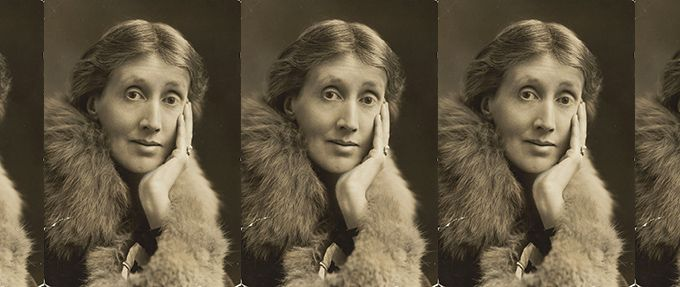
Virginia Woolf: Literary Modernism, Feminist Theory, and Narrative Innovation
Virginia Woolf (1882–1941) stands as one of the defining figures of 20th-century modernist literature and feminist thought.[1] Best known for pioneering narrative techniques such as stream of consciousness and indirect interior monologue, Woolf reshaped the structure of the English novel.[1:1] Beyond her fiction, her foundational essay A Room of One's Own established critical feminist discourse on the economic, social, and physical conditions required for women's artistic independence.[2]
1. Historical & Biographical Context
Early Life and Education
Virginia Adeline Stephen was born in London in 1882 to Sir Leslie Stephen, an eminent Victorian critic and editor, and Julia Prinsep Stephen.[1:2] While her brothers were sent to Cambridge, Woolf was educated at home through private tutors and unrestricted access to her father's vast library.[1:3] This educational disparity deeply affected Woolf and sparked her lifelong critique of patriarchal educational institutions.
Following the sudden death of her mother in 1895 and her father in 1904, Woolf suffered severe psychological breakdowns.[1:4] Mental illness, marked by manic-depressive cycles, remained a recurring struggle throughout her adult life and profoundly influenced her writing on human consciousness and vulnerability.[1:5]
The Bloomsbury Group & The Hogarth Press
After her father's death, Virginia moved to 46 Gordon Square in London with her siblings, Vanessa, Thoby, and Adrian.[1:6] Their home became the focal hub of the Bloomsbury Group—an influential circle of intellectuals, artists, and writers including Lytton Strachey, John Maynard Keynes, E. M. Forster, Clive Bell, and Leonard Woolf, whom Virginia married in 1912.[1:7]
In 1917, Virginia and Leonard Woolf founded The Hogarth Press, purchasing a small handpress for their home in Richmond.[3] The press provided Woolf with complete editorial freedom, releasing her experimental novels without commercial publisher interference.[3:1] Hogarth also published landmark works by T. S. Eliot, Katherine Mansfield, and the first English translations of Sigmund Freud.[3:2]
2. Narrative Innovations & Modernist Aesthetic
Woolf rejected the rigid realisms of 19th-century fiction, arguing that traditional plot-heavy narratives failed to capture the true nature of lived human experience.[1:8]
Stream of Consciousness & Interior Monologue
Woolf developed a refined approach to stream of consciousness using an indirect interior monologue.[1:9] Instead of recording unstructured thoughts, her narrative voice shifts smoothly between multiple characters' inner minds and their external environments.
-
Subjective Time vs. Objective Time: In novels like Mrs Dalloway (1925), objective time (marked by the striking of Big Ben) contrasts sharply with subjective mental time, where a single second can trigger decades of memory.[1:10]
-
Moments of Being: Woolf posited that daily existence consists mostly of unremembered "moments of non-being," occasionally interrupted by rare "moments of being"—epiphanies where an individual perceives the hidden unity of reality.[4]
"Examine for a moment an ordinary mind on an ordinary day. The mind receives a myriad impressions—trivial, fantastic, evanescent, or engraved with the sharpness of steel. From all sides they come, an incessant shower of innumerable atoms..."
3. Feminist Philosophy & Social Critique
A Room of One's Own (1929)
Based on lectures delivered at Newnham and Girton Colleges at Cambridge, A Room of One's Own remains a core text of modern feminist criticism.[2:1] Woolf argues that women's creative achievements have historically been limited not by lack of genius, but by material disenfranchisement.[2:2]
-
Financial Independence: Woolf famously asserted that "a woman must have money and a room of her own if she is to write fiction".[2:3]
-
Judith Shakespeare: Woolf creates a famous thought experiment featuring William Shakespeare's imaginary sister, Judith, who possesses equal genius but is denied education, forced into betrothal, and driven to suicide by a society that denies her artistic agency.[2:4]
-
The Androgynous Mind: Woolf argued that great literary creation requires a mind in which masculine and feminine faculties are harmoniously integrated, allowing the writer to think without gendered friction.[2:5]
Gender Fluidity in Orlando (1928)
Dedicated to her close friend and lover Vita Sackville-West, Orlando: A Biography spans over three centuries.[1:11] The protagonist lives through several eras while seamlessly changing sex from male to female. The work serves as a satirical critique of traditional biography and an early exploration of gender as a social performance.[1:12]
4. Key Works Matrix
| Work | Year | Genre | Core Themes & Literary Breakthroughs |
|---|---|---|---|
| Jacob's Room | 1922 | Novel | First major departure from traditional narrative structure; uses fragments to portray a life. |
| Mrs Dalloway | 1925 | Novel | Stream of consciousness, post-WWI psychological trauma, urban impressionism. |
| To the Lighthouse | 1927 | Novel | Elegiac examination of memory, artistic creation, and time passing ("Time Passes" section). |
| Orlando | 1928 | Novel / Satire | Gender fluidity, time elasticity, identity critique. |
| A Room of One's Own | 1929 | Essay | Materialist feminist critique, economic independence for women artists. |
| The Waves | 1931 | Experimental Novel | Extreme formal innovation; six characters' interior monologues delivered as prose poetry. |
| Three Guineas | 1938 | Essay | Antifascism, pacifism, and the link between patriarchal dominance and militarism. |
5. Modern Legacy & Reception
Woolf's modern reception spans multiple disciplines. In literary history, she is recognized alongside James Joyce, Marcel Proust, and William Faulkner as a pioneer of Modernist prose.[1:13] In gender and cultural studies, her essays continue to provide foundational frameworks for analyzing access, class, and representation in the arts.[2:6]
Resonant Notes
The following vault notes share deep thematic resonance with Virginia Woolf:
-
James Joyce — Woolf and Joyce are twin pillars of literary modernism, both pioneering stream-of-consciousness narrative in the 1920s. While Joyce's Ulysses mapped Homeric myth onto Dublin, Woolf's Mrs Dalloway and To the Lighthouse rendered the granular flow of subjective time with extraordinary precision. Both rejected 19th-century realist conventions in favor of capturing consciousness as it actually moves — an "incessant shower of innumerable atoms."
-
Henri Bergson — Bergson's philosophy of time (durée réelle) — the distinction between clock time and lived, qualitative duration — provides the philosophical scaffolding for Woolf's narrative experiments. Woolf's contrast between Big Ben's objective chimes and the subjective mental time of her characters in Mrs Dalloway is a literary embodiment of Bergson's insight that consciousness does not move through time but constitutes time itself.
-
Henry James — Henry James's "central consciousness" technique and his "House of Fiction" metaphor — filtering narrative through a single character's subjective perception — directly anticipate Woolf's indirect interior monologue. Both writers shifted the locus of drama from external events to the subtle, continuous process of perception and reflection.
-
William James and the Landscape of Eastern Thought — William James coined the term "stream of consciousness" in The Principles of Psychology (1890), providing the conceptual vocabulary that Woolf transformed into literary technique. James's description of consciousness as a continuous, selective, ever-changing flow is the theoretical blueprint for Woolf's narrative method.
-
Jack Kerouac — Kerouac's Spontaneous Prose — "First Thought, Best Thought" — is a direct descendant of Woolf's stream-of-consciousness experiment. Both writers sought to bypass the analytical, editorial mind to capture the raw, unfiltered movement of consciousness. Where Woolf used elegant structural scaffolding (the lighthouse, Big Ben), Kerouac stripped away artifice for a more immediate, Beat version of the same project.
Backlinks
- The Dehumanization of Art — Woolf's stream-of-consciousness technique demands the reader abandon passive emotional consumption, exemplifying Ortega y Gasset's claim that modern art resists being used as an "emotional crutch" and requires a purely aesthetic mode of engagement.
References
British Library / Virginia Woolf Biography / bl.uk ↩︎ ↩︎ ↩︎ ↩︎ ↩︎ ↩︎ ↩︎ ↩︎ ↩︎ ↩︎ ↩︎ ↩︎ ↩︎ ↩︎
Encyclopædia Britannica / A Room of One's Own / britannica.com ↩︎ ↩︎ ↩︎ ↩︎ ↩︎ ↩︎ ↩︎
British Library Shop / A Room of One's Own - Hogarth Press Edition / shop.bl.uk ↩︎ ↩︎ ↩︎
BYU ScholarsArchive / Moments of Non-Being in Woolf's Fiction / scholarsarchive.byu.edu ↩︎