In aesthetics and philosophy, the sublime is the quality of greatness, whether physical, moral, intellectual, metaphysical, aesthetic, spiritual, or artistic. It is a concept that describes an experience of overwhelming magnitude or power that inspires a complex mixture of awe, terror, and ultimately, a heightened sense of self or rational capacity. It is distinctly separated from "the beautiful," which is associated with pleasure, form, and harmony.
I. Longinus and the Origins of the Sublime
The concept of the sublime (Greek: hypsos) in Western thought originates with a 1st-century CE treatise, On the Sublime, traditionally attributed to Longinus.[1]
Longinus approached the sublime primarily as a literary and rhetorical phenomenon, focusing on how language can elevate the soul and produce ecstasy in the audience.[2] He identified five principal sources of sublimity in writing:
-
Innate abilities:
-
Great thoughts or "noble concepts" (the ability to conceive grand ideas).
-
Strong, inspired passion (intense emotion).
-
-
Cultivated skills:
-
The effective use of figures of speech.
-
Noble diction (choice of words).
-
Dignified and elevated composition (arrangement of words).[3]
-
Crucially, Longinus established the foundational idea that the sublime does not merely persuade the intellect; it overpowers the audience, leading them to a state of ecstasy (being taken out of oneself).[4] This overwhelming force and violence against pure rational judgment laid the groundwork for modern aesthetic theories.
II. Edmund Burke: The Physiological Sublime
In 1757, Edmund Burke published A Philosophical Enquiry into the Origin of Our Ideas of the Sublime and Beautiful, which fundamentally shifted the concept from literary criticism to human psychology and physiology.[5] Burke was the first to sharply contrast the sublime with the beautiful, presenting them as antithetical experiences.
The Beautiful vs. The Sublime
Burke grounded his aesthetic theory in the empiricist tradition, tracing these aesthetic judgments back to basic human sensations of pleasure and pain, and our instinctual drives for socialization and self-preservation.[6]
| Aspect | The Beautiful | The Sublime |
|---|---|---|
| Root Emotion | Pleasure (Social/Sexual instincts) | Pain/Terror (Self-preservation) |
| Physical Qualities | Smallness, smoothness, delicate curves, clear light.[7] | Vastness, power, obscurity, difficulty, infinity, darkness.[8] |
| Psychological Effect | Love, relaxation, affection. | Awe, astonishment, "delightful horror." |
"Delightful Horror" and Distance
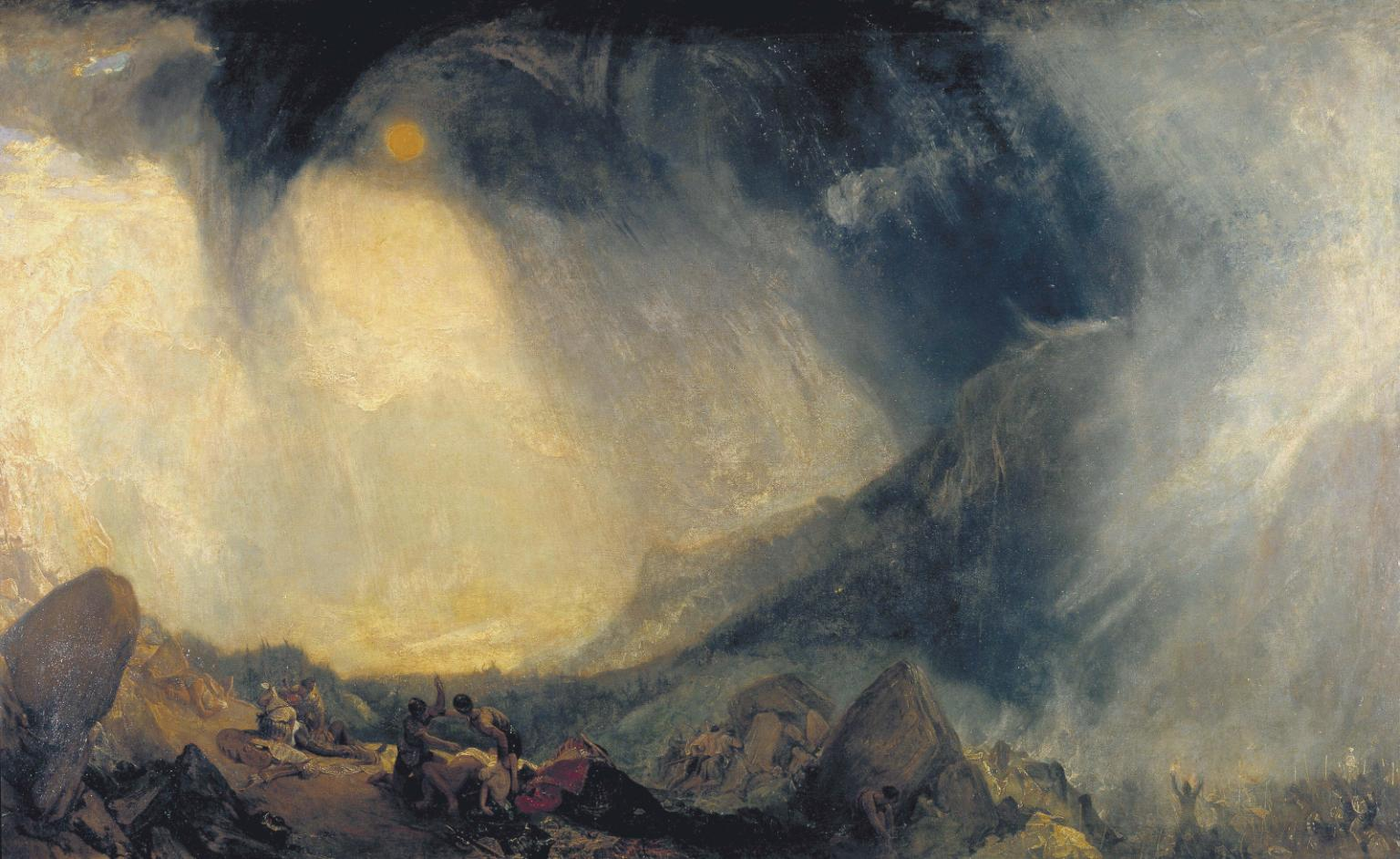
For Burke, terror is the ruling principle of the sublime.[9] A towering mountain, a dark abyss, or a raging storm evokes a visceral fear of destruction. However, this terror only becomes an aesthetic experience of the sublime (rather than mere actual terror) when there is a safe distance.
Burke argued that confronting a deadly force is not sublime if the danger is immediate. It is only when we are insulated from actual harm that the mind can experience the psychological thrill and awe—what he termed "delightful horror"—without the paralyzing effects of real danger.[10]
III. Immanuel Kant: The Transcendental Sublime
Immanuel Kant expanded upon Burke's foundation in his Critique of Judgment (1790). While Kant accepted Burke's distinction between the beautiful and the sublime, he rejected Burke's purely empirical and physiological explanation.[11] For Kant, the sublime is not a property of objects in nature, but rather a process that occurs within the human mind.[12]
Kant famously divided the sublime into two distinct categories:
1. The Mathematically Sublime
This occurs when we are confronted with something of absolute, immense magnitude—something so vast that our imagination fails to comprehend it as a single totality (e.g., the starry night sky, the concept of infinity, or attempting to count the grains of sand on a beach).[13]
-
The Failure of Imagination: The mind's sensible faculties attempt to grasp the immense object but are overwhelmed and fail, causing a feeling of displeasure or inadequacy.[14]
-
The Triumph of Reason: This failure awakens our higher, supersensible faculty of Reason, which can conceptualize the idea of infinity or absolute totality even when the imagination cannot picture it.[15]
-
The Resulting Feeling: The initial displeasure turns into a profound pleasure as we recognize the superiority of our own rational, moral nature over the mere physical vastness of the natural world.
2. The Dynamically Sublime
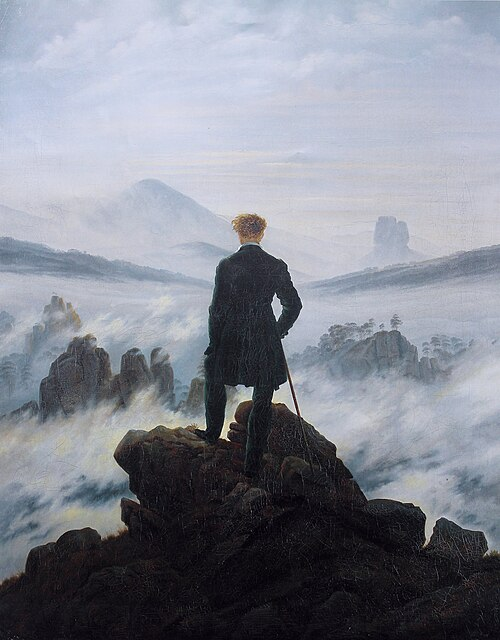
This form of the sublime is triggered by observing the overwhelming power and might of nature (e.g., a raging storm, a violent waterfall, an erupting volcano), provided we are in a safe position.[16]
-
Nature appears fearsome, revealing our physical helplessness and insignificance as biological creatures.[17]
-
However, from a place of safety, this encounter prompts us to realize our independence from nature as moral, rational beings. We recognize an internal strength that nature cannot destroy.
-
Therefore, the dynamically sublime elevates our self-estimation, demonstrating that human reason and moral agency transcend physical forces.[18]
For Kant, "true sublimity must be sought only in the mind of the judging subject, and not in the object of nature that occasions this attitude." The roaring ocean is not sublime in itself; it merely acts as the trigger for the mind to discover its own sublimity.
See Also
- The Sublime in Buddhist Psychology — A Buddhist psychological analysis of the sublime, exploring vedanā, māna, śūnyatā, and the attention-intention loop.
References
Neel Burton / The Beautiful vs the Sublime / neelburton.com ↩︎
EUP Publishing / Kant and Burke's Sublime in Werner Herzog's Films / euppublishing.com ↩︎
Neel Burton / The Beautiful vs the Sublime / neelburton.com ↩︎
EUP Publishing / Kant and Burke's Sublime in Werner Herzog's Films / euppublishing.com ↩︎
Neel Burton / The Beautiful vs the Sublime / neelburton.com ↩︎
Partially Examined Life / Topic for #107: Edmund Burke on the Sublime / partiallyexaminedlife.com ↩︎
Neel Burton / The Beautiful vs the Sublime / neelburton.com ↩︎
Neel Burton / The Beautiful vs the Sublime / neelburton.com ↩︎
EUP Publishing / Kant and Burke's Sublime in Werner Herzog's Films / euppublishing.com ↩︎
Neel Burton / The Beautiful vs the Sublime / neelburton.com ↩︎
EUP Publishing / Kant and Burke's Sublime in Werner Herzog's Films / euppublishing.com ↩︎
Partially Examined Life / Topic for #107: Edmund Burke on the Sublime / partiallyexaminedlife.com ↩︎
Stanford Encyclopedia of Philosophy / Kant's Aesthetics and Teleology / plato.stanford.edu ↩︎
The Hooded Utilitarian / More is Never Enough, or Kant's Numerical Sublime / hoodedutilitarian.com ↩︎
Stanford Encyclopedia of Philosophy / Kant's Aesthetics and Teleology / plato.stanford.edu ↩︎
The Hooded Utilitarian / More is Never Enough, or Kant's Numerical Sublime / hoodedutilitarian.com ↩︎
EUP Publishing / Kant and Burke's Sublime in Werner Herzog's Films / euppublishing.com ↩︎
Stanford Encyclopedia of Philosophy / Kant's Aesthetics and Teleology / plato.stanford.edu ↩︎