Anthony Vidler: The Architectural Uncanny
The Architectural Uncanny: Essays in the Modern Unhomely (1992) is a seminal text by architectural historian and theorist Anthony Vidler. The book explores how the psychological concept of the "uncanny" (derived from Sigmund Freud) has been translated into spatial and architectural terms, particularly within modern and contemporary architecture. Vidler argues that the modern condition is fundamentally "unhomely," marked by spatial anxiety, alienation, and fragmentation.
Theoretical Foundations: From Psychology to Space
Anthony Vidler's thesis bridges psychoanalytic theory and architectural history. The primary foundation of his argument relies heavily on Sigmund Freud's 1919 essay, "The Uncanny" (Das Unheimliche).[1]
Freud defined the uncanny not merely as something terrifying, but as something that is frightening precisely because it is deeply familiar yet simultaneously foreign. The German word unheimlich translates literally to "unhomely," which exists in a dialectical relationship with heimlich (homely or familiar).[2]
Vidler takes this psychological condition and maps it onto the built environment. He argues that architecture—traditionally conceived as a provider of shelter, comfort, and "homeliness"—has, in the modern era, become a primary site for generating feelings of unease, disorientation, and estrangement.[3]
"The uncanny is not a property of the space itself nor can it be provoked by any particular spatial conformation; it is, in its aesthetic dimension, a representation of a mental state of projection that precisely elides the boundaries of the real and the unreal in order to provoke a disturbing ambiguity, a slippage between waking and dreaming." (Anthony Vidler)
Key Themes and Concepts
1. The Subversion of the Domestic
Historically, the house is the ultimate symbol of safety and the rational ordering of the world. Vidler examines how the 19th-century literary trope of the "haunted house" (popularized by writers like Edgar Allan Poe and E.T.A. Hoffmann) evolved into a broader spatial critique in the 20th century. In modernism, the failure of the utopian, rational "machine for living in" (a concept championed by Le Corbusier) gave way to domestic spaces that harbor psychological dread and alienation.[4]
2. Bodily Fragmentation
Classical architecture relied on the proportions of the idealized human body (e.g., the Vitruvian Man) to create harmonious, symmetrical spaces. Vidler observes that contemporary architecture—particularly Deconstructivism—rejects this holistic view. Instead, buildings by architects like Peter Eisenman and Coop Himmelblau reflect a "fragmented body." These structures use warped geometries, shattered planes, and disjointed forms to mirror the psychological and physical dismemberment of the modern subject.[5]
3. Urban Estrangement
Vidler extends the uncanny from the domestic interior to the scale of the metropolis. Drawing on the writings of Walter Benjamin and Georg Simmel, he explores how the modern city acts as a labyrinthine space that induces alienation, paranoia, and agoraphobia. The vastness of urban infrastructure, the ruins of industrial decay, and the anonymity of the crowd transform the city into an inherently "unhomely" environment.[6]
Architectural Manifestations
Vidler's book was published shortly after the famous 1988 "Deconstructivist Architecture" exhibition at the Museum of Modern Art (MoMA) in New York, and it serves as a critical theoretical companion to that architectural movement.
Vidler specifically analyzes the work of several late-20th-century architects whose designs evoke the architectural uncanny:
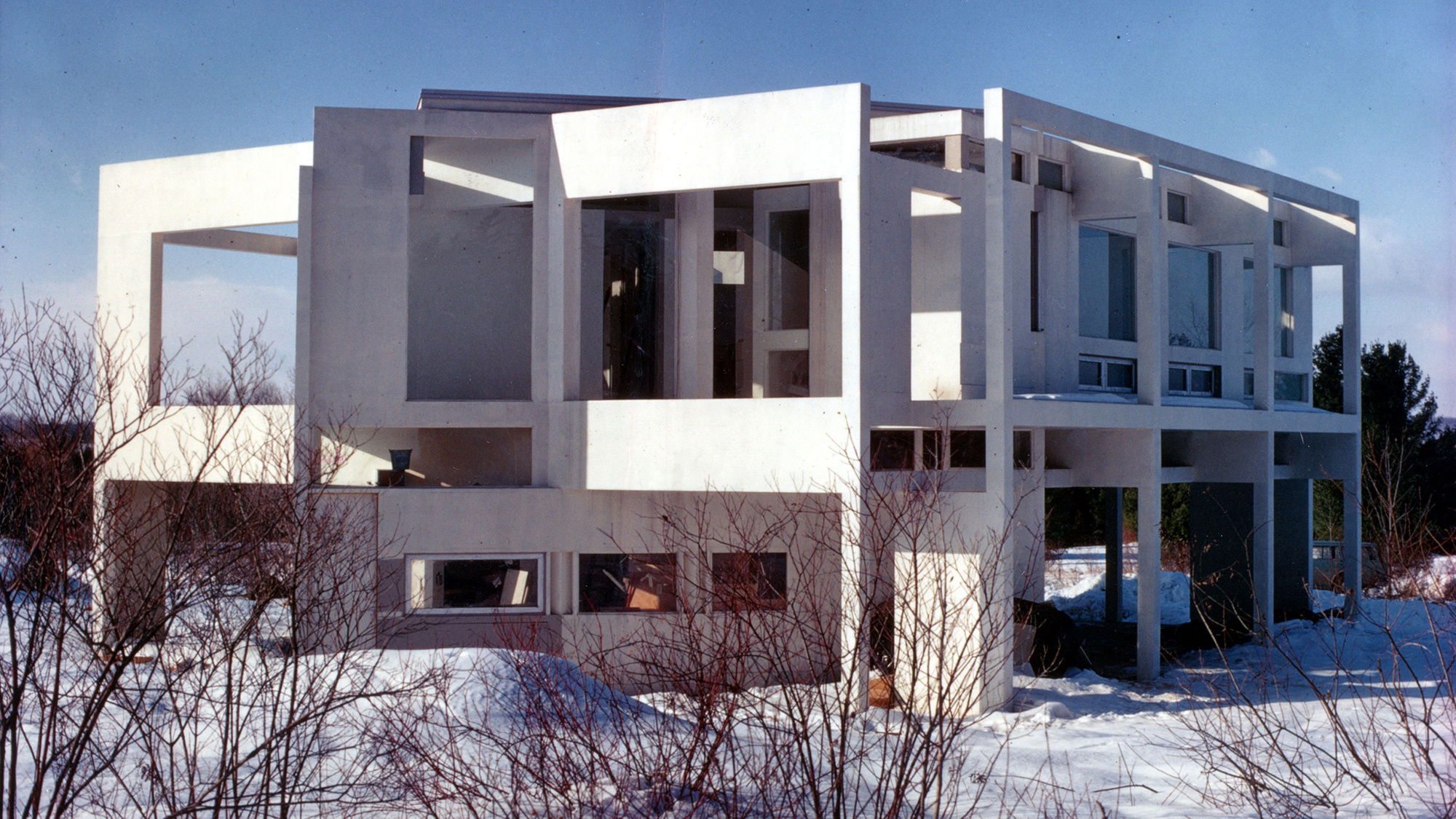
Peter Eisenman: Known for his complex, grid-based designs that intentionally disorient the user. Eisenman's work rejects the traditional comforts of human-centered scaling, creating spaces that feel detached and intellectually demanding.
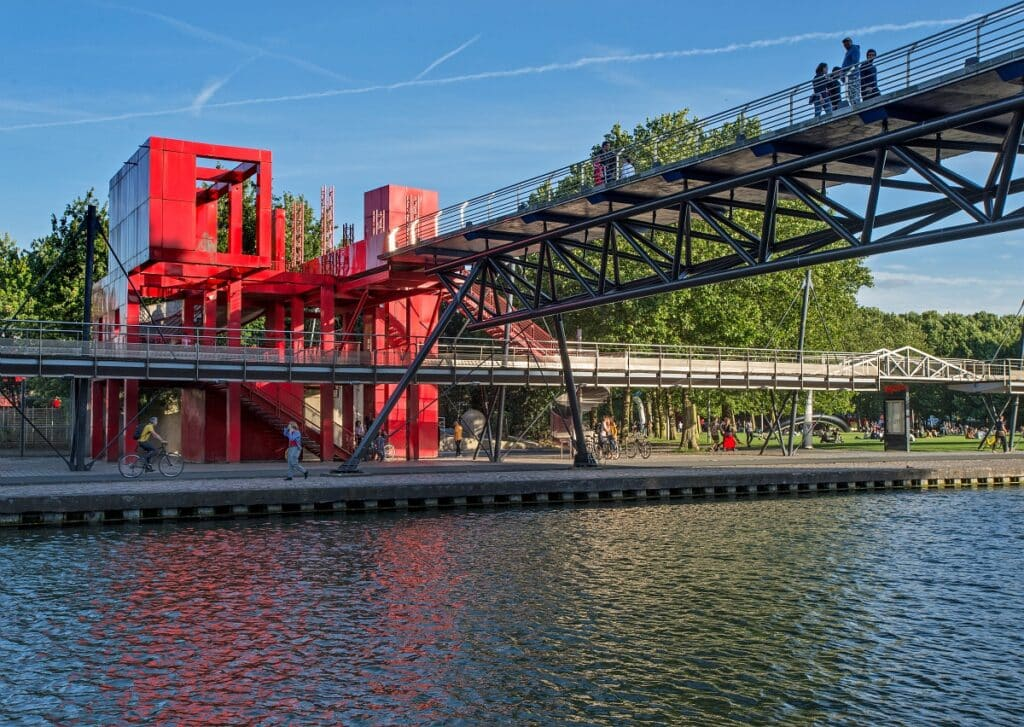
Bernard Tschumi: His design for Parc de la Villette in Paris utilized dispersed, red architectural "follies" that disrupt traditional spatial continuity, creating a landscape of cinematic fragmentation and eerie repetition.
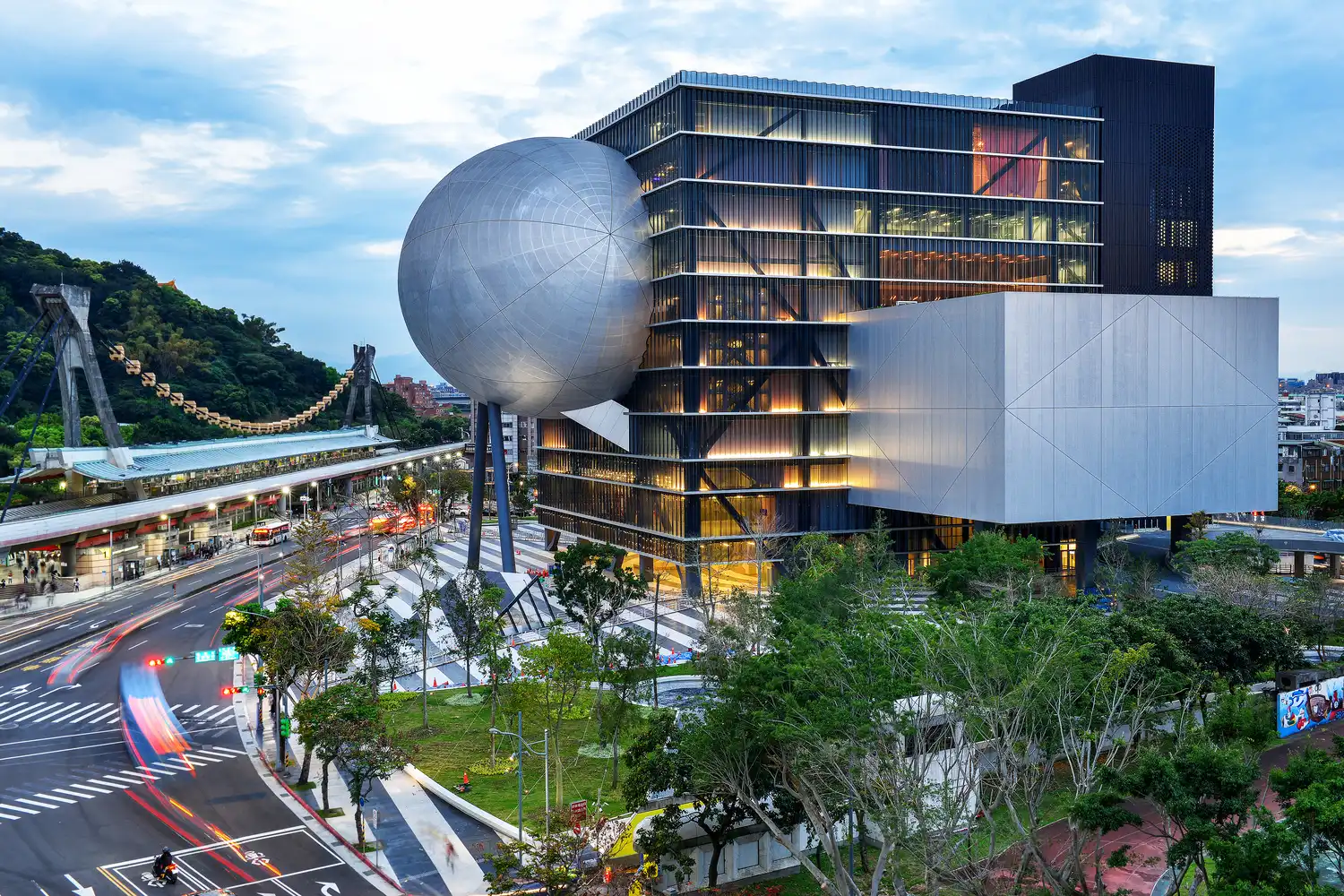
Rem Koolhaas: Vidler explores Koolhaas's fascination with the "culture of congestion" and the paranoid-critical method (borrowed from Salvador Dalí) applied to metropolitan architecture.
Legacy and Impact on Architectural Theory
The Architectural Uncanny fundamentally shifted the discourse in architectural theory during the 1990s. It provided a vocabulary to critique the failures of modernist utopianism without falling into the nostalgic pastiche of Postmodernism.
By framing architecture through the lens of psychoanalysis and spatial anxiety, Vidler demonstrated that buildings are not just functional objects or aesthetic forms; they are powerful psychological apparatuses that reflect the deep-seated neuroses, anxieties, and traumas of modern society.[7]
Resonant Notes
The following notes in this vault engage with themes that resonate with Vidler's architectural uncanny — the unhomely, spatial anxiety, alienation, and the failure of representational systems:
-
Freud's The Uncanny (Das Unheimliche) — The foundational psychoanalytic text Vidler builds on. Freud's analysis of das Unheimliche (the unhomely) is the theoretical core of the entire project. This note explicitly references Vidler's architectural application.
-
The Psychology and Sociology of Estrangement-The Uncanny and Alienation — Traces the same conceptual lineage (Freud, Jentsch, Marx, Brecht, Fisher) that Vidler maps onto the built environment. The uncanny and alienation as twin poles of the modern condition.
-
The Failure of the Map-Art, the Uncanny, and the Divided Brain — The strongest single resonance. Treats the uncanny as the felt experience when a representational system (the left hemisphere's abstract "map") fails to capture lived reality — the same structural dynamic Vidler identifies in architecture's failure to provide genuine shelter.
-
From Walls of Wood to Walls of Glass - Northrop Frye's Geography of Isolation — Frye's "condominium mentality" — architecture producing proximity without community — is a literary-critical framework for the same urban estrangement Vidler diagnoses. The shift from garrison to condominium mirrors Vidler's account of how modern architecture generates alienation rather than shelter.
-
Giorgio de Chirico — De Chirico's Pittura Metafisica — deserted arcades, distorted perspectives, looming shadows, faceless mannequins — is the visual art movement that most directly embodies the architectural uncanny. His empty piazzas are the aesthetic equivalent of Vidler's unhomely metropolis.
-
René Magritte — Magritte's method of displacement — removing familiar objects from expected contexts to make them "shriek aloud" — parallels Vidler's analysis of how architecture defamiliarizes domestic space. Both explore the uncanny as a disruption of the familiar.
-
Franz Kafka — Kafka's bodily estrangement (The Metamorphosis) and systemic absurdity (The Trial) are literary expressions of the unhomely condition Vidler describes in architectural terms: the familiar rendered alien, the home turned trap.
-
Travis Bickle — Embodies urban alienation and the uncanny double in the city — the exact territory of Vidler's analysis of the metropolis as labyrinthine space inducing paranoia and agoraphobia.
-
Don DeLillo Major Themes Analysis — DeLillo's diagnosis of late capitalism's hyperreality and digital estrangement extends Vidler's architectural uncanny into the mediated, informational landscape. Mark Fisher's merger of Marxist alienation with the Freudian uncanny is the next step after Vidler's spatial analysis.
-
Louis Sass - Phenomenological Psychopathology and the Self — Sass's analysis of schizophrenia as a disorder where the familiar becomes strange and objects lose their natural context ("the truth-taking stare") is the clinical psychopathological parallel to the uncanny spatial experience Vidler describes.
References
Anthony Vidler / The Architectural Uncanny: Essays in the Modern Unhomely / MIT Press ↩︎
Sigmund Freud / The Uncanny (Das Unheimliche) / American Psychological Association ↩︎
Mark Wigley / The Architecture of Deconstruction: Derrida's Haunt / MIT Press ↩︎
Vidler, Anthony / The Uncanny in Architecture / Architectural Association School of Architecture ↩︎
Philip Johnson and Mark Wigley / Deconstructivist Architecture (MoMA Exhibition Catalog) / MoMA ↩︎
Walter Benjamin / The Arcades Project / Harvard University Press ↩︎
K. Michael Hays / Architecture's Desire: Reading the Late Avant-Garde / MIT Press ↩︎