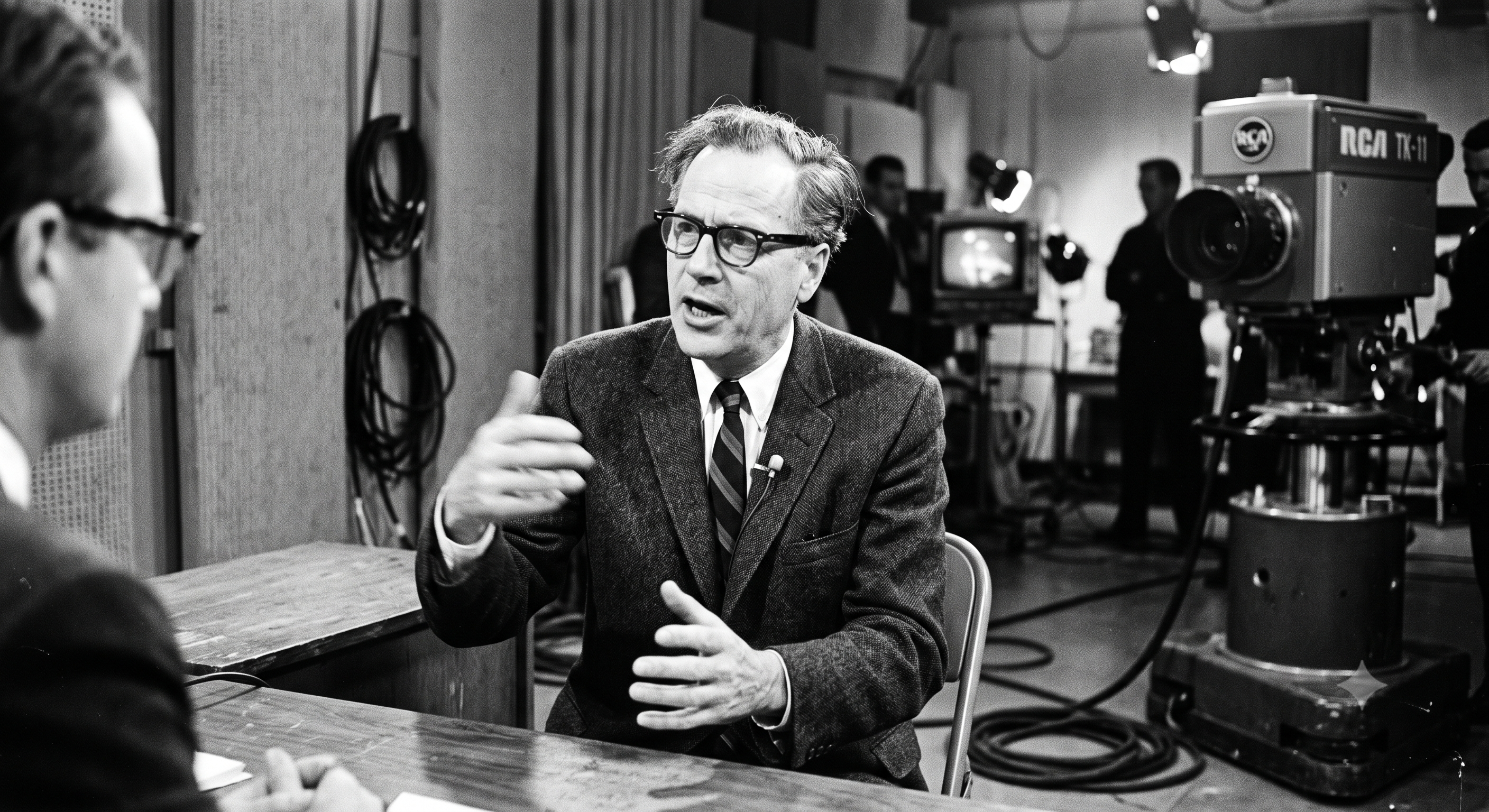
The Medium is the Message: A Comprehensive Analysis of Media Ecology, Technological Determinism, and Cultural Transformation
The study of communication, sociology, and media underwent a profound paradigmatic shift in 1964 with the publication of Understanding Media: The Extensions of Man by the Canadian philosopher and communication theorist Marshall McLuhan. In the opening chapter of this foundational text, McLuhan introduced an aphorism that would irrevocably alter the trajectory of media studies and cultural theory: "the medium is the message". This deceptively simple declarative sentence posits that the structural, material, and environmental characteristics of a communication medium are far more consequential to human affairs, cognition, and social organization than the explicit semantic content that the medium conveys.
By shifting the analytical focus away from the meaning of a message toward the technological apparatus that delivers it, McLuhan established a revolutionary framework for evaluating the historical impacts of technological innovation. A communication medium does not merely serve as a neutral conduit for information; rather, it introduces a change of scale, pace, or pattern into human association, acting as a powerful environmental force that restructures human consciousness and societal architectures. This exhaustive report provides a granular examination of the historical genesis, theoretical architecture, aesthetic applications, and subsequent critical reception of McLuhan's conceptual framework. Furthermore, it synthesizes alternative media theories and contemporary feminist critiques to evaluate the enduring relevance of media ecology in the modern era of algorithmic curation, social media, and artificial intelligence.
The Epistemological Foundations: The Toronto School of Communication
To fully comprehend the magnitude of McLuhan's theoretical contributions, it is imperative to trace the intellectual genealogy of his ideas to the mid-twentieth-century academic climate at the University of Toronto. During this period, a unique interdisciplinary convergence occurred, leading to the formation of a distinct intellectual tradition now recognized as the Toronto School of Communication Theory. The central tenet of the Toronto School is the primacy of communication systems in structuring human cultures and the human mind, operating on the premise that communication technologies do not merely transmit data but actively create psychological and social states.
The school traces its origins to the 1930s work of classicist Eric A. Havelock and political economist Harold Adams Innis, and it grew to prominence through the subsequent contributions of scholars such as Edmund Snow Carpenter, Northrop Frye, Ursula Franklin, and Marshall McLuhan. In the early 1950s, funded by the Ford Foundation, McLuhan and Carpenter initiated the Communication and Culture seminars, an interdisciplinary working group drawing participants from economics, anthropology, urban studies, and psychology. This fertile intellectual environment eventually led the University of Toronto to establish the Centre for Culture and Technology in 1963, a dedicated institute designed to retain McLuhan and formalize the study of media effects.
The Influence of Harold Innis
The intellectual anchor of the Toronto School, and the scholar who most profoundly influenced McLuhan's trajectory, was Harold Adams Innis. Originally focused on the economic history of Canada—authoring definitive studies on the fur trade and cod fisheries—Innis later turned his attention to the macro-historical impacts of communication technologies on the rise and fall of empires. Innis's agrarian background fostered a deep ecological thinking and an acute awareness of material conditions, which contrasted with McLuhan's literary and aesthetic roots.
In his landmark works, Empire and Communications (1950) and The Bias of Communication (1951), Innis introduced the concept that every medium possesses an inherent material "bias" that dictates its influence over civilization. Innis categorized media into two distinct classifications based on their physical properties and their corresponding societal effects:
-
Time-Biased Media: These consist of heavy, durable materials such as clay tablets, stone inscriptions, and parchment. Because they are difficult to transport, their influence does not extend far geographically, but their physical durability ensures they last for generations. Consequently, societies dominated by time-biased media tend to favor tradition, historical continuity, religious hierarchy, and contractionist institutions, as seen in ancient Mesopotamia.
-
Space-Biased Media: These consist of light, ephemeral materials such as papyrus and paper. These media are easily transported over vast distances, facilitating bureaucratic administration, secular political authority, military expansion, and the control of geographical space. The Roman Empire's reliance on papyrus is a classic manifestation of a space-biased civilization.
Innis argued that for a civilization to survive and flourish, it must maintain a delicate equilibrium between time-biased and space-biased media. When a society becomes dominated by one form, it risks the formation of "monopolies of knowledge," wherein a small elite class controls the dominant communication technology to consolidate power. A society entirely dominated by time-biased media risks becoming culturally rigid and stagnant, while one overwhelmed by space-biased media loses its sense of historical continuity, becomes obsessed with the present, and over-extends its military and administrative capacities.
The Synthesis of Economics and Literary Formalism
McLuhan, deeply influenced by Innis, famously referred to his own 1962 book, The Gutenberg Galaxy, as a "footnote to the observations of Innis" on the social consequences of writing and printing. However, while both scholars operated from a standpoint of technological determinism, their methodological approaches and theoretical foci diverged significantly.
McLuhan's intellectual background was rooted in philology and literary criticism, having studied at Cambridge University under the pioneers of New Criticism, F.R. Leavis and I.A. Richards. New Criticism emphasized the formal aspects of literature, arguing that the structural form of a text had a direct correlation to the kinds of meanings it communicated, independent of historical or authorial intent. McLuhan adapted this literary formalism and applied it to technology. Furthermore, his mother, an elocutionist, influenced his rhetorical style, leading to a prose characterized by sharp-tongued metaphors, literary analogies, and non-linear poetic aphorisms.
| Dimension of Analysis | Harold Adams Innis | Marshall McLuhan |
|---|---|---|
| Primary Domain of Focus | Macro-historical social organization, political economy, institutional power, and the stability of empires. | Micro-historical sensory organization, individual perception, human cognition, and consciousness. |
| Intellectual and Methodological Roots | Economic history, geography, monopolies of knowledge, institutional competition. | Literary criticism (New Criticism), formalism, symbolist poetry, psychology of perception. |
| Mechanism of Societal Change | The physical bias of a medium (durability vs. portability) dictates spatial expansion or temporal preservation. | The medium acts as a physical extension of the human sensorium, altering the biological ratio of the senses. |
| General Outlook on Technology | Pessimistic; warned that modern electronic media intensified dangerous monopolies of knowledge. | Ambiguous but generally optimistic; viewed the electronic age as a return to holistic, tribal consciousness. |
Where Innis viewed media primarily through the lens of institutional control and resource distribution, McLuhan translated these concepts into the realm of the human body and mind. McLuhan asserted that technologies are physical extensions of human faculties, and that the introduction of a new medium fundamentally alters the sensory equilibrium of the individual.
Deconstructing "The Medium is the Message"
At the core of McLuhan's media ecology is a deliberate subversion of the traditional communication paradigm. In classical information theory, popularized by Claude Shannon and Warren Weaver, a sender encodes a semantic message, transmits it through a channel, and a receiver decodes it. In this linear model, the channel (the medium) is viewed merely as a neutral vessel. McLuhan utterly rejected this neutrality. He argued that the most significant effect of any communication technology lies not in the explicit content it transmits, but in the structural modifications it imposes on human existence.
The Illusion of Content and the Nesting of Media
A fundamental barrier to understanding media, according to McLuhan, is humanity's persistent fixation on "content." In a striking and frequently cited metaphor, he likened the content of a medium to "a juicy piece of meat carried by the burglar to distract the watchdog of the mind." Because individuals are preoccupied with evaluating the moral, political, educational, or entertainment value of the programming (the meat), they remain entirely oblivious to the radical structural changes the technology itself (the burglar) is introducing into their homes, interpersonal relationships, and neurological systems.
To illustrate this structural blindness, McLuhan pointed out that "the 'content' of any medium is always another medium." This concept of the nesting of media demonstrates how new technologies absorb older forms of communication, serving as their supposed content. For example, the content of writing is the prior medium of speech; the content of print is the written word; and the content of the telegraph is print. If one traces this regression to its absolute origin, the ultimate content of speech is the nonverbal, physiological process of human thought itself.
Because the content is always a previous medium, it serves as a powerful distraction that blinds society to the character and psychological impact of the new medium. When a novel technology is introduced, society evaluates it based on the old technology it carries, failing to recognize that the new scale, pace, or pattern introduced by the delivery mechanism is the true message. The meaning of meaning, McLuhan argued, is a relationship; the medium dictates the parameters of that relationship, acting as a form of metacommunication that governs how human beings interact with one another and their environment.
The Electric Light Bulb: Pure Information
To clarify how a medium can exert profound societal influence entirely independent of any semantic message, McLuhan frequently cited the electric light bulb. The electric light bulb is unique because it is "pure information"; it is a medium utterly devoid of conventional content. A light bulb does not publish articles like a newspaper, nor does it broadcast narratives like a television or radio.
Yet, the social consequences—the "message"—of the electric light bulb are staggering. It radically altered the scale and form of human association by eliminating the constraints of time and space previously governed by the natural cycle of the sun. By its mere physical presence, the light bulb created entirely new environments, enabling nighttime sporting events, precision brain surgery, and uninterrupted twenty-four-hour industrial production. Whether the light is used for surgery or baseball is a matter of complete indifference to the study of the medium itself; those activities are effectively the "content" that could not exist without the enabling technology.
The electric light typically escapes attention precisely because of its lack of content. It is only when an electric light is arranged to spell out a brand name on a billboard that people recognize it as a medium, and paradoxically, in that very moment, they notice only the content (the brand name, which is the medium of writing) rather than the light itself. McLuhan noted that large corporations often suffer from this blindness; while IBM realized early on that they were in the business of "processing information," General Electric long believed they merely manufactured light bulbs, failing to see that they were fundamentally in the business of "moving information" and altering human environments.
Sensory Extensions and Narcissus Narcosis
Central to McLuhan's method was the conviction that all media and technologies are literal "extensions of ourselves," a concept he traced back to the philosophical traditions of Ralph Waldo Emerson and the anthropological insights of Edward T. Hall. A wheel is an extension of the foot; clothing is an extension of the skin; the book is an extension of the eye; and a weapon is an extension of the teeth and fists. With the advent of the electric age, McLuhan argued that technology had progressed past the extension of isolated physical limbs to the point of extending the human central nervous system globally, abolishing geographical distance and creating an interconnected, simultaneous "global village."
However, this process of technological extension comes at a severe biological and psychological cost. Drawing heavily on classical mythology, McLuhan theorized the concept of Narcissus narcosis to describe humanity's relationship with its tools. In the myth, Narcissus became infatuated with a reflection in a pool, failing to realize he was looking at an extension of himself. The reflection numbed his perception, freezing him in a state of paralysis. McLuhan posited that humanity suffers from an identical condition when engaging with technological extensions.
Every technological extension functions as a prosthetic device. In human biology, the body attempts to maintain equilibrium by numbing the area where a prosthesis is attached to prevent overwhelming sensory shock. Therefore, every technological extension involves a corresponding "amputation" or numbing of the biological faculty it replaces. As humans extend their nervous systems through electronic media, they suffer a profound cognitive numbing—a narcosis—that leaves them alienated from their own creations and blind to the environmental shifts occurring around them. This technological somnambulism allows the medium to operate subliminally, restructuring the user's perception without triggering conscious resistance.
The Taxonomy of Media: Hot and Cool
A pivotal, yet frequently misunderstood, component of McLuhan's media ecology is his classification of technologies into "hot" and "cool" media. This distinction was derived from French anthropologist Claude Lévi-Strauss's classification of hot and cold societies, though McLuhan repurposed it for sensory analysis. This terminology does not refer to the physical temperature of the device, the emotional intensity of the content, or the contemporary slang for popularity. Rather, it refers strictly to the medium's "definition" (the amount of sensory data provided) and the corresponding degree of cognitive participation demanded from the audience.
The Dynamics of Hot Media
Hot media are characterized as "high definition." They are saturated with data and present a vast amount of clear, distinct information directed primarily at a single human sense. Because the sensory data is so complete and highly resolved, hot media demand very little participation, imaginative effort, or cognitive completion from the audience. The medium does the work, enveloping the user in a seamless flow of information.
These media tend to foster analytical precision, quantitative reasoning, and sequential, linear ordering. Examples of hot media include the photograph, typography (print), radio, and the cinematic movie. In a dark movie theater, for instance, the visual sense is overwhelmed with high-definition imagery, requiring minimal imaginative synthesis by the viewer, leading to a state of isolated captivation.
The Dynamics of Cool Media
Cool media, conversely, are "low definition." They provide minimal sensory data, presenting an incomplete, fuzzy, or highly abstracted stimulus. Because the information provided is sparse, the audience must actively participate, projecting their own cognitive effort to "fill in the blanks" and complete the picture to extract meaning.
Cool media foster inclusivity, simultaneous comprehension, and deep communal involvement, requiring multi-sensory synthesis. Examples of cool media include speech, the telephone, cartoons, seminars, and the 1960s-era television. McLuhan famously categorized early television as a cool medium because its low-resolution, mosaic mesh of cathode-ray dots required the viewer's brain to constantly construct the image, promoting empathetic, collective social involvement rather than isolated individualism.
| Media Property | Hot Media | Cool Media |
|---|---|---|
| Information Density | High definition (data-rich, sharp, distinct). | Low definition (data-poor, ambiguous, fuzzy). |
| Audience Participation | Low (passive reception, low cognitive effort). | High (active completion, "filling in the blanks"). |
| Sensory Engagement | Isolates and intensifies a single sense. | Requires multi-sensory synthesis and simultaneous perception. |
| Cognitive Bias | Linear, sequential, analytical, individualistic. | Holistic, simultaneous, immersive, tribal. |
| Primary Examples | Print, Radio, Movies, Photographs, Lectures. | Speech, Telephone, Television (1960s), Cartoons, Seminars. |
It is critical to note that the hot/cool dichotomy is relative and comparative rather than absolute. As media theorist Corey Anton explains, media environments can "heat up" or "cool down" depending on how they are utilized, altered, or placed in comparison to other media. For example, the grainy, low-definition television of the 1960s was a cool medium requiring deep participation. However, modern high-definition television, especially when decoupled from live broadcasting via on-demand streaming platforms that encourage binge-watching, has been significantly "heated up" to become a high-definition, isolating experience more akin to film. Similarly, a basic acoustic telephone call is cool, but a modern smartphone—equipped with high-resolution screens, GPS, and rapid text messaging—represents a heated evolution of the original technology, though it retains cool, participatory elements through social networking.
Visualizing the Theory: The Design of The Medium is the Massage
The practical application of McLuhan's theories regarding the non-linear, environmental effects of media reached a creative and commercial zenith in 1967 with the publication of The Medium is the Massage: An Inventory of Effects. Co-created with graphic designer Quentin Fiore and coordinator Jerome Agel, this brief, 160-page paperback became a cultural phenomenon, achieving bestseller status and a cult following by fundamentally subverting the traditional medium of the typographic book.
The Typographical Error as Theoretical Affirmation
The title of the book originated from an infamous typesetting error. The intended title was The Medium is the Message, but the printer accidentally set the final word as "Massage" on the cover proofs. Upon seeing the error, McLuhan refused to correct it, exclaiming, "Leave it alone! It's great, and right on target!" He recognized that the accident constituted a brilliant, multi-layered pun that perfectly encapsulated his theoretical framework, acting as a prime example of the surrealist mantra to honor errors as hidden intentions.
The word "Massage" implies that the medium physically works over the human sensorium; it rubs, kneads, and roughs up the audience, softening intellectual resistance and altering neurological pathways. Furthermore, the pun yielded four distinct, simultaneous readings of the title, all of which were accurate to McLuhan's philosophy:
- Message: The original intended meaning, focusing on the structural impact of technology.
- Mass Age: A commentary on the contemporary era of mass media, mass production, and globalized audiences.
- Mess Age: A reference to the chaotic, disordered sensory overload of the electronic era.
- Massage: The physical, tactile, and chiropractically manipulative effect of the medium on human perception.
Graphic Design as Theoretical Enactment
The true brilliance of The Medium is the Massage lies in Quentin Fiore's avant-garde graphic design. Operating not merely as an illustrator but as a co-author, Fiore translated McLuhan's dense academic aphorisms into a visual analogue. Fiore drew upon a diverse heritage of visual disruption, citing influences ranging from Moholy-Nagy and Dada collages (Heartfield and Hausmann) to concrete poetry and underground 1960s publications.
Fiore's layout was a deliberate structural argument designed to shatter the linear, sequential logic of the Gutenberg era. He utilized an experimental collage style, employing high-contrast photographs, extreme font size variations across single spreads, and texts superimposed directly over jarring imagery. Some pages were printed backward, requiring the reader to use a physical mirror to decode them, while others were left entirely blank to provoke contemplation or demonstrate the concept of sensory deprivation. He also included self-referential photographs of thumbs holding the pages open, highlighting the literal, physical dimension of the book as an object.
By destabilizing the traditional hierarchy of image and caption, Fiore created a "collide-oscope of interfaced situations." The reader is prevented from consuming the book in a passive, linear fashion. Instead, the layout forces the reader to shift cognitive registers constantly—from reading sequential typography to scanning holistic photographic facsimiles—simulating the bombardment and multi-sensory immersion of the electronic age. In doing so, The Medium is the Massage acts as an embodiment of the theory it espouses: the medium of the experimental paperback itself becomes the message, forcing a structural disruption of the reader's perceptual habits.
The Structural Grammar of Technology: The Tetrad of Media Effects
In his later years, facing criticism that his theories lacked empirical rigor and systematic methodology, McLuhan, alongside his son Eric McLuhan, developed the "Tetrad of Media Effects." This framework was published posthumously in the 1988 book Laws of Media: The New Science. Recognizing that traditional linear, cause-and-effect scientific reasoning was insufficient for understanding the complex, ecological nature of technology, the McLuhans proposed a heuristic device consisting of four simultaneous laws that govern every human artifact, medium, or technology.
The Tetrad posits that the impact of any medium can be comprehensively analyzed by asking four distinct questions. Visually, the Tetrad is depicted as four diamonds forming an X-shape, reflecting the Gestalt psychological principles of Figure (the conscious focus of attention) and Ground (the unconscious, environmental context). These four laws operate concurrently as a structural grammar of technology, avoiding chronological or sequential progression:
- Enhancement (Figure): What does the medium amplify, intensify, or make possible? Every technology extends a specific human organ, faculty, or capability.
- Obsolescence (Ground): What does the medium drive out of prominence? Because human sensibility seeks equilibrium, when one area of experience is heightened, a previously dominant technology or social practice is diminished, bypassed, or rendered obsolete.
- Retrieval (Figure): What older, previously obsolesced environment or cultural practice does the new medium recover and bring back to the forefront? The content of a new medium often revives an older form of communication or social structure.
- Reversal (Ground): What does the medium flip into when pushed to the extreme limits of its potential? Overheated media reverse their characteristics, often producing the opposite of their original intended effect.
Applying the Tetrad to Media Analysis
The diagnostic power of the Tetrad lies in its ability to chart the unforeseen secondary and tertiary consequences of a technology, moving beyond subjective moral judgments of content.
| Medium Analyzed | Enhancement (Amplifies) | Obsolescence (Diminishes) | Retrieval (Recovers) | Reversal (Flips Into) |
|---|---|---|---|---|
| The Automobile | Personal mobility, speed, and privacy. | The horse, the carriage, and pedestrian-centric urban community spaces. | The heavy armor of the medieval knight (an enclosed metallic shell for physical protection). | Traffic jams, gridlock, and urban sprawl, paralyzing the mobility it was designed to create. |
| Radio | Dissemination of news and music over vast distances simultaneously via sound. | Print media, visual dominance, and the geographical limitations of communication. | The oral tradition, tribal acoustic space, and the communal bonding of the spoken word. | Audio-visual television when the acoustic medium is pushed to its absolute threshold of saturation. |
| The Cigarette | Calm, poise, and provides a physical action for the hands. | Feelings of awkwardness and individual loneliness. | A sense of community, group security, and tribal ritualistic activity. | Addiction and severe health crises when consumption is taken to the extreme. |
| The Internet / Social Media | Global interactivity, instantaneous self-publishing, and conviviality. | Traditional centralized gatekeepers, print journalism, and spatial/geographical boundaries. | Tribalism, gossip, and village-scale community dynamics on a global scale. | Information overload, surveillance capitalism, extreme polarization, and the total loss of privacy. |
By deploying the Tetrad, analysts can systematically dissect the dialectical tensions inherent in technological adoption, revealing the "logos-structure" of artifacts rather than merely documenting their functional utility.
The Determinism Debate: Critiques and Alternative Frameworks
While McLuhan achieved unprecedented popularity, gracing the covers of national magazines and advising corporate titans, his work was subjected to intense, often hostile scrutiny by subsequent generations of communication theorists, sociologists, and cultural critics. The primary axis of critique revolves around the tension between McLuhan's perceived technological determinism and the social constructivism of his academic detractors.
Raymond Williams and the Marxist Critique
The most prominent early critic of McLuhan was the British cultural and literary theorist Raymond Williams, who approached media analysis from a Marxist perspective known as cultural materialism. Williams accused McLuhan of engaging in "technological determinism," a reductionist ideology that treats technology as an autonomous, inevitable force that follows its own internal logic, determining the development of social structure and cultural values.
For Williams, McLuhan's assertion that the content of the medium does not matter—and his dismissal of human intent as the "numb stance of the technological idiot"—amounted to a dangerous political abdication. Williams argued that if the effect of a medium is identical regardless of who controls or uses it, then vital questions of political economy, institutional power, and ideological domination are entirely erased from the discourse. Instead, Williams championed the Social Shaping of Technology (SCOT) (or social constructivism), arguing that technologies do not develop in a vacuum. Rather, human agents, corporate interests, and existing power structures consciously design, fund, deploy, and regulate technology to reproduce existing social relations and sustain dominant ideologies. In Williams's view, society shapes technology far more than technology dictates society, and the specific content distributed by media (such as war propaganda or climate change denial) has massive, quantifiable impacts on public behavior that cannot be dismissed as mere "burglar's meat."
Stuart Hall, the CCCS, and the Active Audience
The critique of McLuhan's determinism was further advanced by the Birmingham School, notably the Centre for Contemporary Cultural Studies (CCCS), founded by Richard Hoggart in 1964 and later directed by Stuart Hall. While Hoggart and Hall initially shared McLuhan's goal of establishing media and popular culture as legitimate subjects of academic study, they radically diverged regarding audience agency. Where McLuhan posited that audiences are neurologically manipulated and homogenized by the medium (experiencing the sleepwalking state of Narcissus narcosis), Hall focused on the semantic and ideological power of content and the interpretative autonomy of the viewer.
Hall's seminal Encoding/Decoding model revolutionized cultural studies by positioning the audience as active participants in the creation of meaning, directly challenging the "hypodermic needle" model of media effects. According to Hall, media producers "encode" messages with a dominant, hegemonic ideology intended to maintain the status quo. However, audiences do not passively absorb these messages; they "decode" them based on their own cultural backgrounds, economic class, and lived experiences. An audience member may accept the dominant reading, adopt a negotiated reading (accepting the premise but altering it to fit local conditions), or produce a radically oppositional reading to resist the ideological framing entirely. By reasserting the importance of representational content and the interpretative agency of marginalized groups, Hall provided a vital, politically engaged corrective to McLuhan's formalized view of a hypnotized public.
Alternative Media Effects Paradigms
Beyond cultural studies, mainstream quantitative communication research developed alternative theories to understand media influence, fundamentally departing from McLuhan's exclusive focus on the medium's form:
-
Agenda-Setting Theory: Developed by Maxwell McCombs and Donald Shaw in the 1970s, this theory posits that the media does not tell the public what to think, but rather what to think about. By prioritizing certain topics (e.g., placing a story on the front page or leading a prime-time broadcast), the media shapes the public agenda and determines the salience of specific issues, regardless of the medium used.
-
Cultivation Theory: Developed by George Gerbner, this theory argues that persistent, long-term exposure to television content has subtle but measurable effects on audience perception. Unlike McLuhan's focus on the neurological effects of the cathode-ray tube, Gerbner focused on the cumulative narrative themes of television programming. He identified the "Mean World Syndrome," demonstrating that heavy viewers of television—regardless of the specific shows watched—internalize the medium's pervasive violent content and subsequently perceive the real world as far more dangerous and threatening than empirical statistics support.
These theories demonstrate that while McLuhan correctly identified the structural impact of technology, the semantic content and the frequency of exposure continue to exert profound, measurable influences on human psychology and social behavior.
Backlinks
-
Defining a Simulacrum — McLuhan's "Narcissus narcosis" — the numbing that occurs when we mistake our own technological extensions for external realities — is the psychological condition that makes hyperreality possible. We become somnambulant, blind to the environmental shifts our media create, living in a simulacrum of our own making.
-
Defining a Simulacrum — McLuhan's "Narcissus narcosis" — the numbing that occurs when we mistake our own technological extensions for external realities — is the psychological condition that makes hyperreality possible. We become somnambulant, blind to the environmental shifts our media create, living in a simulacrum of our own making.
-
Defining a Simulacrum — McLuhan's "Narcissus narcosis" — the numbing that occurs when we mistake our own technological extensions for external realities — is the psychological condition that makes hyperreality possible. We become somnambulant, blind to the environmental shifts our media create, living in a simulacrum of our own making.
-
Defining a Simulacrum — McLuhan's "Narcissus narcosis" — the numbing that occurs when we mistake our own technological extensions for external realities — is the psychological condition that makes hyperreality possible. We become somnambulant, blind to the environmental shifts our media create, living in a simulacrum of our own making.
-
Defining a Simulacrum — McLuhan's "Narcissus narcosis" — the numbing that occurs when we mistake our own technological extensions for external realities — is the psychological condition that makes hyperreality possible. We become somnambulant, blind to the environmental shifts our media create, living in a simulacrum of our own making.
-
Defining a Simulacrum — McLuhan's "Narcissus narcosis" — the numbing that occurs when we mistake our own technological extensions for external realities — is the psychological condition that makes hyperreality possible. We become somnambulant, blind to the environmental shifts our media create, living in a simulacrum of our own making.
Backlinks
-
George Orwell — Postman's Amusing Ourselves to Death explicitly contrasts Orwell's fear of authoritarian censorship (state-enforced thought control) with Huxley's vision of voluntary thought abdication through trivial amusements. Orwell's Nineteen Eighty-Four and Postman's media ecology are complementary diagnoses of how societies lose the capacity for rational democratic discourse — one through force, the other through entertainment.
-
Portmanteau (also known as a lexical blend or blend word) — McLuhan's "The Medium is the Massage" is itself a portmanteau — the typographical error yielded "Massage" as a blend of "Message," "Mass Age," "Mess Age," and "Massage," perfectly illustrating lexical blending in action.
Media Ecology and the Metaphor of Thought: Neil Postman
While British cultural studies and empirical sociologists critiqued McLuhan, American educational theorist Neil Postman embraced and expanded upon McLuhan's foundations, formally codifying the academic discipline of "Media Ecology." In his highly influential book Amusing Ourselves to Death: Public Discourse in the Age of Show Business (1985), Postman adapted "the medium is the message" into a new corollary: "the medium is the metaphor."
Postman argued that a society's dominant medium dictates the epistemological framework—the metaphor—through which it understands truth, intelligence, and reality. In a typographic, print-dominated culture, public discourse is characterized by linear logic, rationality, delayed gratification, and substantive debate. Postman pointed to the multi-hour Lincoln-Douglas debates of the 19th century as the pinnacle of typographic discourse, where audiences possessed the attention span to process complex, spoken essays.
However, the rise of television completely restructured the social environment. Television, by its visual, fast-paced, and inherently emotive nature, demands entertainment above all else. Postman warned that television turns all serious subject matter—politics, religion, education, and news—into "congenial adjuncts of show business." A politician is judged not by the coherence of their policy, but by their visual telegenic appeal and ability to deliver soundbites; news is measured by its dramatic graphics, pacing, and theme music rather than its civic value.
Unlike George Orwell's fear of authoritarian censorship and state violence depicted in 1984, Postman aligned with Aldous Huxley's vision in Brave New World, positing that society would be ruined not by what it fears, but by what it loves: a constant stream of trivial amusements that renders a population incapable of rational democratic participation. Furthermore, Postman advocated for a "thermostatic view" of education, arguing that schools should act as a counterweight to the dominant media environment; in an era obsessed with image and rapid change, education must emphasize typographic literacy, historical context, and deep reading to preserve intellectual balance.
Feminist Extensions and the Intersectional Critique
In recent years, contemporary scholars have expanded the critique of McLuhan by highlighting the gendered, racial, and colonial blind spots inherent in his universalizing theories. In the edited volume Re-understanding Media: Feminist Extensions of Marshall McLuhan (2022), scholars such as Sarah Sharma and Rianka Singh critically re-evaluate McLuhan's legacy for the modern era.
Feminist media theorists criticize McLuhan for deploying his power analysis on a flat, "homogenized man," effectively ignoring how media technologies intersect with race, class, gender, disability, and sexuality. The concept of technology as a universal "extension of man" assumes that all individuals have equal access to, and agency over, these technologies. In reality, marginalized groups often experience technology not as empowering extensions, but as architectures of control, surveillance, and subjugation.
However, rather than discarding McLuhan entirely due to his well-documented personal conservatism and essentialism, these scholars appropriate his structural focus to analyze the hidden biases of artifacts. They reject the dominant liberal techno-logic that views technology merely as a neutral "tool" that simply needs "better representation" or more diverse engineering teams. Instead, they apply McLuhan's formalist critique to reveal how power dynamics are physically built into media environments:
-
Gendered Information Infrastructure: Craig Robertson demonstrates how the physical medium of the filing cabinet in the early 20th century was structured alongside gendered assumptions. The mindless, repetitive physical labor of filing was designed specifically for women, conceptually freeing men for the "higher" intellectual tasks of synthesis and decision-making. Similarly, Cait McKinney highlights the "Knitting Needle Computer"—edge-notched index cards sorted with knitting needles—illustrating how early digital information technologies relied heavily on gendered domestic crafts.
-
Technologies of Containment vs. Extension: Brooke Erin Duffy and Jeremy Packer argue that masculinist culture overrates expansive technologies of "extension" (like rockets and broadcast towers) while systematically underrating domestic technologies of "containment," applying McLuhan's media lens to objects like Tupperware to reveal the gendered nature of preservation media.
-
Transportation as Resistance: Armond R. Towns argues that 19th-century enslaved Black Americans had to conceptualize and navigate transportation technologies in ways fundamentally different from their white captors. For those traversing the Underground Railroad, cargo boxes and attics became subversive media of transportation necessary for survival.
-
Platforms and Visibility: Rianka Singh and Sarah Banet-Weiser compare digital social media platforms to historical physical platforms—such as the witches' gallows, the slave auction block, and the high-heeled shoe—to argue that increased visibility is often a vulnerability and a mechanism of control for marginalized bodies, rather than an automatic path to liberation.
By applying McLuhan's power analysis of technological forms to the material realities of marginalized populations, feminist theorists successfully merge the insight that "the medium is the message" with an acute awareness of intersectional power dynamics, proving that technologies often mediate existing inequalities and act in conservative, rather than revolutionary, ways.
Contemporary Relevance: AI, Algorithms, and the Modern Global Village
Decades after his death, McLuhan's theories remain startlingly prescient when applied to the digital landscape of the twenty-first century. The transition from traditional broadcast media to the algorithmic architectures of the internet perfectly exemplifies the doctrine that the medium overrides the message.
When observing platforms like TikTok or X (formerly Twitter), the specific content consumed—whether a geopolitical analysis, a dance trend, or a brand advertisement—is secondary to the structural format of the delivery mechanism. Twitter's character limit physically enforces brevity, prioritizing emotional impact, outrage, and instant gratification over nuanced deliberation. TikTok's endless, vertical scrolling and algorithmically curated short-form videos structurally alter the user's attention span and dopamine pathways. The medium trains the central nervous system to crave novelty and process information in fragmented, hyper-stimulating bursts, fundamentally rearranging the user's sense of the world. Furthermore, the hyper-personalization driven by algorithms creates isolated echo chambers, altering the nature of public discourse and political reality.
The rise of Artificial Intelligence (AI) represents a frontier that McLuhan would have recognized instantly as a transformative medium. Generative AI is not merely a faster tool layered onto existing workflows; it is an entirely new environmental medium that fundamentally reorganizes human cognition and scholarly communication. AI acts as an active, generative intellectual partner, shifting the authority of knowledge creation from the individual human author toward probabilistic, statistical consensus generated at scale. The "message" of AI is not the specific text, summary, or image it generates, but rather the total reconfiguration of authorship, the disruption of traditional peer review, the automation of real-time communication, and the potential atrophy of human cognitive labor. As McLuhan warned, every extension is an amputation; as AI extends the intellect, society must grapple with what cognitive faculties are being subsequently numbed.
Finally, in the context of the internet, McLuhan's vision of the "global village" has materialized, but as critics and McLuhan himself observed, a village is not inherently peaceful. Digital media have created the condition of the "discarnate man"—individuals communicating instantly across the globe without the presence of physical bodies. Stripped of physical presence, gravity, and the restraints of natural law, users often exhibit an aggressive lack of empathy online, willing to inflict spiritual violence they would never attempt face-to-face. McLuhan accurately theorized that the loss of physical identity via electronic media would precipitate a desperate quest for meaning and identity, frequently manifesting in reciprocal violence, extreme tribalism, and digital hostility.
Synthesis and Concluding Remarks
Marshall McLuhan's assertion that "the medium is the message" remains one of the most robust, provocative, and transformative analytical frameworks in the study of human civilization. By shifting the intellectual gaze away from the explicit semantic content of a message and directing it toward the structural, material biases of the technology that carries it, McLuhan exposed the invisible architectures that govern human perception, social organization, and historical progress.
While the theory has been rightfully contested and refined by critical scholars—who accurately point out its blind spots regarding political economy, race, gender, and the active interpretative agency of the audience—the core premise remains unassailable: technologies are never neutral vessels. From the electric light bulb to the printing press, and from the television to generative Artificial Intelligence, every new medium radically restructures the environment it enters. It extends human faculties while simultaneously amputating others, creating cascading ecological consequences that fundamentally alter the human condition.
In an era dominated by algorithmic curation, personalized digital realities, and the omnipresence of machine learning, understanding the profound ways in which our media massage our senses is no longer merely an academic exercise in literary formalism. It is an essential prerequisite for recognizing the environments we inhabit and maintaining cognitive and democratic autonomy within the turbulent confines of the global village.
Works cited
- The medium is the message - Wikipedia, https://en.wikipedia.org/wiki/The_medium_is_the_message
- The Medium and McLuhan's Message - Fordham Research Commons, https://research.library.fordham.edu/cgi/viewcontent.cgi?article=1008&context=comm_facultypubs
- Understanding Media - Wikipedia, https://en.wikipedia.org/wiki/Understanding_Media
- The Medium is the Message - MIT, https://web.mit.edu/allanmc/www/mcluhan.mediummessage.pdf
- THE MEDIUM IS THE MESSAGE, https://www1.gill-line.com/digital-files/UXlzqI/001008/The_Medium-Is-The_Message.pdf
- Toronto school of communication theory - Wikipedia, https://en.wikipedia.org/wiki/Toronto_school_of_communication_theory
- The Toronto School's Perspective on Media and Technology - Journalism University, https://journalism.university/media-and-communication-theories/toronto-school-media-technology-perspective/
- The Toronto School of Communication Theory: Interpretations, Extensions, Applications 9781442689442 - DOKUMEN.PUB, https://dokumen.pub/the-toronto-school-of-communication-theory-interpretations-extensions-applications-9781442689442.html
- From Marshall McLuhan to Harold Innis, or From Global Village t - 2016 Summer Institute, http://www.2016.incasummer.ca/wp-content/uploads/2015/01/2662-7688-2-PB.pdf
- Marshall McLuhan | The Toronto School Initiative, https://thetorontoschool.ca/marshall-mcluhan/
- Marshall McLuhan - Wikipedia, https://en.wikipedia.org/wiki/Marshall_McLuhan
- The encyclopedia of the Toronto School of Communication - Human as Media, https://human-as-media.com/2025/01/26/the-encyclopedia-of-the-toronto-school-of-communication/
- Centre for Culture and Technology | The Toronto School Initiative, https://thetorontoschool.ca/cct/
- Harold Innis and the Empire of Speed, https://library.fes.de/libalt/journals/swetsfulltext/8357292.pdf
- Harold Adams Innis and Marshall McLuhan - WordPress.com, https://acg5214s22013.files.wordpress.com/2013/07/wk-5-carey-on-mcluhan-and-innis-1967-antioch-review.pdf
- Introducing Innis/McLuhan concluding - Freotopia, https://freotopia.org/readingroom/7.1/Onuf.html
- McLuhan Light and Dark - Media-Studies@ca, https://www.media-studies.ca/articles/mcluhan.htm
- McLuhan Probes the Impact of Mass Media on Society - EBSCO, https://www.ebsco.com/research-starters/communication-and-mass-media/mcluhan-probes-impact-mass-media-society
- Negotiation Lost in Translation - Pouria Nazemi, https://pourianazemi.com/en/negotiation-lost-in-translation/
- Technological or Media Determinism - visual-memory.co.uk, http://visual-memory.co.uk/daniel/Documents/tecdet/tdetold.html
- Marshall McLuhan's Dying Words | Future Commerce Insiders, https://www.futurecommerce.com/posts/marshall-mcluhans-dying-words
- A Comprehensive Analysis of Marshall McLuhan's Understanding Media - meinpodcast.de, https://meinpodcast.de/bookey-book-summary-and-review/making-sense-of-the-media-a-comprehensive-analysis-of-marshall-mcluhans-understanding-media/
- The medium is the message and Social Networks: How the concepts of Marshall McLuhan apply to digital platforms of social exchange between users | Comunicación y Hombre, https://comunicacionyhombre.com/en/article/the-medium-is-the-message-and-social-networks-how-the-concepts-of-marshall-mcluhan-apply-to-digital-platforms-of-social-exchange-between-users/
- Hot and cool media - Oxford Reference, https://www.oxfordreference.com/display/10.1093/oi/authority.20110810105107935
- Theory | McLuhan Galaxy | Page 2, https://mcluhangalaxy.wordpress.com/category/theory/page/2/
- McLuhan 02: Hot vs Cool Media - Squid Inc., https://squidinc.com/work/mcluhans-hot-vs-cool-media/
- Rhetorics of the Web: McLuhan Hot and Cool, https://kairos.technorhetoric.net/2.1/features/brent/tvmcluha.htm
- Reappraising Marshall McLuhan's Distinction Between Hot & Cool Media by Corey Anton, https://mcluhangalaxy.wordpress.com/2015/07/05/reappraising-marshall-mcluhans-distinction-between-hot-cool-media-by-corey-anton/
- The Medium Is the Massage - Wikipedia, https://en.wikipedia.org/wiki/The_Medium_Is_the_Massage
- Book, The Medium is the Massage: - An Inventory of Effects, by Marshall McLuhan and Quentin Fiore - C-i-r-c-u-l-a-t-i-o-n, https://c-i-r-c-u-l-a-t-i-o-n.org/media/pdf/Massaging-the-Message.pdf
- The Medium is the Massage (*that is not a typo): An Inventory of Effects - jami floyd, https://jamifloyd.medium.com/the-medium-is-the-massage-an-inventory-of-effects-2321e88c5124
- The medium is the massage - Austin Kleon, https://austinkleon.com/2019/06/10/the-medium-is-the-massage/
- Marshall McLuhan: How the Medium Influences the Way We Buy - Copywriting Services, https://copyadscontent.com/who-was-marshall-mcluhan/
- Mediagraphic "rendezvous" – Fiore and McLuhan's "Medium is the massage" (1), https://mediagraphic.hypotheses.org/2324
- Turning Pages: The Medium is the Massage | The Dialog, https://dialognews.ca/2025/11/04/turning-pages-the-medium-is-the-massage/
- THE MEDIUM IS THE MESSAGE - ftp.womantours.com, https://ftp.womantours.com/content/aorxfN/AlggSe/TheMediumIsTheMessage.pdf
- Tetrad of media effects - Grokipedia, https://grokipedia.com/page/Tetrad_of_media_effects
- Tetrad of media effects - Wikipedia, https://en.wikipedia.org/wiki/Tetrad_of_media_effects
- The McLuhan's tetrad in communication research: systematic review of applications in Brazil and Portugal, https://revistas.usp.br/matrizes/article/download/160112/160695/407208
- Marshall MacLuhan's Tetrad of media effects | Systems Community of Inquiry, https://stream.syscoi.com/2021/04/22/marshall-macluhans-tetrad-of-media-effects/
- McLuhan's Tetrad in Media Analysis | PDF | Communication | Cognitive Science - Scribd, https://www.scribd.com/document/564687295/Mcluhan-Tetrad
- Computers and Media: McLuhan & Responsive Media - Data Science Lab, http://data.science.uoit.ca/wp-content/uploads/2015/09/mc-2-mcluhan.pdf
- Christ the Perfect Medium | Modern Reformation, https://www.modernreformation.org/resources/essays/christ-the-perfect-medium
- Theories of Marshall McLuhan and Raymond Williams Perspective of Media - Essay Typing, https://essaytyping.com/theories-of-marshall-mcluhan-and-raymond-williams-perspective-of-media/
- Technology and Agency – Media Studies 101 - BC Open Textbooks, https://opentextbc.ca/mediastudies101/chapter/technology-and-agency/
- Technological Determinism and The Social Construction of Technology Handout - Scribd, https://www.scribd.com/document/990469257/Technological-Determinism-and-the-Social-Construction-of-Technology-Handout
- The Method is the Message: Rethinking McLuhan Through Critical Theory, https://cjc.utppublishing.com/doi/10.22230/cjc.1999v24n1a1087
- The Technology is not the Cultural Form?: Raymond Williams's Sociological Critique of Marshall McLuhan - ResearchGate, https://www.researchgate.net/publication/279642072_The_Technology_is_not_the_Cultural_Form_Raymond_Williams's_Sociological_Critique_of_Marshall_McLuhan
- JLMC 574: Social Shaping of Technology vs. Technological Determinism - Prezi, https://prezi.com/2tghvltsdsxk/jlmc-574-social-shaping-of-technology-vs-technological-determinism/
- Technological determinism - Wikipedia, https://en.wikipedia.org/wiki/Technological_determinism
- Cultural studies - Wikipedia, https://en.wikipedia.org/wiki/Cultural_studies
- Semester-5 DSCC 11 – Advanced Media & Cultural Theories Comprehensive Study Material Unit 1, https://mmccollege.ac.in/uploads/1765873894_SEM5_DSCC11_Study_Material.pdf
- Marshall McLuhan and Cultural Studies - Winnipeg School of Communication, https://winnsox.com/journal/article/marshall-mcluhan-and-cultural-studies
- Rethinking Convergence Culture: Insights from Cultural Studies - Studocu Vietnam, https://www.studocu.vn/vn/document/hutech-university-of-technology/ourism-and-hospitality-management/rethinking-convergence-culture-insights-from-cultural-studies/149696326
- The Medium, the Message, and the Multitude: - designLog, https://designlog.dedotsign.com/the-medium-the-message-and-the-multitude/
- Cultural Studies of Stuart Hall | Dawson College, https://www.dawsoncollege.qc.ca/ai/wp-content/uploads/sites/180/08-Cultural-Studies-of-Stuart-Hall.pdf
- The Medium Matters More Than Ever - The Journal of Media Literacy, https://ic4ml.org/journal-article/the-medium-matters-more-than-ever/
- Decoding Media-Society Theories: From Technological Determinism to Feminist Media Theories - Journalism University, https://journalism.university/fundamentals-of-development-and-communication/technological-determinism-feminist-media-theories/
- Full article: RETHINKING CONVERGENCE/CULTURE - Taylor & Francis, https://www.tandfonline.com/doi/full/10.1080/09502386.2011.600527
- 2.2 Media Effects Theories | Media and Culture - Lumen Learning, https://courses.lumenlearning.com/suny-massmedia/chapter/2-2-media-effects-theories/
- Cultivation Theory and Media Effects | PDF | Psychological Concepts | Cognition - Scribd, https://www.scribd.com/document/539062790/Media-Effects-Theories
- Unit 3 Theories of Mass Communication - eGyanKosh, https://egyankosh.ac.in/bitstream/123456789/57015/3/Unit-3.pdf
- Cultivation Theory: Media, Reality, and the Shaping of Social Perceptions | by Symbiosis, https://scrmci.medium.com/cultivation-theory-media-reality-and-the-shaping-of-social-perceptions-238463dfad1a
- Neil Postman's media ecology: Are we amusing ourselves to death - mindful technics, https://mindfultechnics.com/neil-postman-media-ecology-amusing-ourselves-to-death/
- Neil Postman | Biography | Research Starters - EBSCO, https://www.ebsco.com/research-starters/biography/neil-postman
- The Not School discussion of Neil Postman's Amusing Ourselves to Death, https://partiallyexaminedlife.com/2013/04/13/the-not-school-discussion-of-neil-postmans-amusing-ourselves-to-death/
- Amusing Ourselves to Death - Wikipedia, https://en.wikipedia.org/wiki/Amusing_Ourselves_to_Death
- Re-Understanding Media: Feminist Extensions of Marshall McLuhan - International Journal of Communication, https://ijoc.org/index.php/ijoc/article/download/21313/4172/73744
- Re-Understanding Media: Feminist Extensions of Marshall McLuhan: Edited by Sarah Sharma and Rianka Singh. Durham, NC, https://www.tandfonline.com/doi/pdf/10.1080/10714421.2023.2189398
- Re-understanding media : feminist extensions of Marshall McLuhan / edited by Sarah Sharma and Rianka Singh. - Canadian Centre for Architecture, https://www.cca.qc.ca/en/search/details/library/publication/1253353230
- Q&A with Sarah Sharma, Author of Insufferable Tools | Duke University Press News, https://dukeupress.wordpress.com/2026/04/16/qa-with-sarah-sharma-author-of-insufferable-tools/
- The medium is the model: AI as a new environment for research, https://www.researchinformation.info/analysis-opinion/the-medium-is-the-model-ai-as-a-new-environment-for-research/
- In our modern world is the medium still the message? - ChangeMakers, https://thechangemakers.com/insight/are-you-ready-for-the-next-crisis/
- The Medium is the Message: How TikTok, AI, and Social Media Shape Our World, https://medium.com/@angiepitts/the-medium-is-the-message-how-tiktok-ai-and-social-media-shape-our-world-ae2947f18bc4
- McLuhan Today: AI as Medium, Shaping the Global Village and Extending Human Intellect, https://www.preprints.org/manuscript/202509.0543
- "The Medium is the Message" | McLuhan Galaxy - WordPress.com, https://mcluhangalaxy.wordpress.com/2010/10/30/the-medium-is-the-message/
- Harold Innis vs. Marshall McLuhan | The Politics of New Media, https://cmn4ward.wordpress.com/category/harold-innis-vs-marshall-mcluhan/
- On Nature and Media - Marshall McLuhan - organism.earth, https://www.organism.earth/library/document/nature-and-media
Backlinks
-
Defining a Simulacrum — McLuhan's "Narcissus narcosis" — the numbing that occurs when we mistake our own technological extensions for external realities — is the psychological condition that makes hyperreality possible. We become somnambulant, blind to the environmental shifts our media create, living in a simulacrum of our own making.
-
The Dehumanization of Art — McLuhan's "the medium is the message" is a stunning parallel to Ortega y Gasset's window metaphor. McLuhan argues we should look at the medium itself, not the content — exactly what Ortega says modern art demands. Both thinkers shift attention from representational content to the formal structure of the medium.