Stephen Batchelor
Stephen Batchelor (b. April 7, 1953) is a Scottish author, scholar, translator, and meditation teacher recognized as the primary pioneer of Secular Buddhism.[1] Trained for over a decade as an ordained monk in both Tibetan Gelugpa and Korean Zen traditions, Batchelor advocates stripping traditional Buddhism of its Asian cultural scholasticism, dogmatic metaphysics (such as literal rebirth and karma), and institutional hierarchies. His work proposes an existential, practice-oriented "dharma" that engages directly with modern secular life.[2]
Biographical Evolution
Stephen Batchelor's journey reflects a unique trajectory through monastic traditionalism to modern secular philosophy:
-
Early Life & Tibetan Monasticism (1972–1981): At age 19, Batchelor traveled overland to Dharamshala, India, joining the Tibetan exile community.[2:1] He was ordained as a Gelugpa novice monk in 1974 under the tutelage of Geshe Rabten and studied Tibetan language and monastic philosophy.[2:2]
-
Transition to Korean Zen (1981–1985): Seeking a practice less reliant on intellectual scholasticism, he moved to South Korea in 1981 to train in Son (Zen) Buddhism at Songgwangsa monastery under Zen Master Kusan Sunim.[2:3]
-
Disrobing and Return to the West (1985): Disillusioned by traditional views on cosmology, karma, and unquestioning guru worship, Batchelor disrobed as a monk in 1985.[3] That same year, he married Martine Fages, a former French Zen nun.[3:1]
-
Teaching & Institutional Impact: Together with Martine, Batchelor settled in Europe, teaching worldwide at centers like Gaia House and the Barre Center for Buddhist Studies.[3:2] He later co-founded Bodhi College, an educational organization devoted to investigating early Buddhist texts through critical study and contemplative practice.[4]
Core Philosophical Framework: Secular Dharma
Rather than treating Buddhism as a religious belief system to be accepted, Batchelor views the dharma as an existential "operating system" or therapeutic framework designed to foster human flourishing.[5]
The Four Tasks vs. Metaphysical Truths (ELSA)
Batchelor’s central intellectual contribution is his reinterpretation of the Four Noble Truths.[5:1] He argues that translating these as "truths" transforms them into metaphysical claims (e.g., "Life is suffering") that require dogmatic belief.[6]
By analyzing early Pāli texts, Batchelor asserts that the Buddha intended them as four practical tasks to be enacted, summarized by the acronym ELSA:[5:2]
-
E — Embrace: Embrace the full reality of dukkha (the existential distress, instability, and impermanence of life).
-
L — Let go: Let go of reactivity, craving, and defensive grasping.
-
S — See: See or behold the cessation of reactivity—noticing moments when the mind is clear, unburdened, and peaceful.
-
A — Act / Actualize: Cultivate and act upon an integrated, ethical way of life in the world.
Deep Agnosticism
Batchelor champions "profound agnosticism" over religious certainty.[3:3] He encourages practitioners to embrace doubt, radical questioning, and "not-knowing".[3:4] In his view, rejecting doctrines like reincarnation and supernatural realms does not diminish the dharma; rather, it grounds ethics squarely in the present life.[5:3]
The Ten Theses of Secular Dharma
In After Buddhism (2015), Batchelor articulated ten core principles defining secular practice:[3:5]
-
Dharma practice is for this world alone.[3:6]
-
Practice consists of enacting the four tasks.[5:4]
-
All human beings—regardless of race, gender, or religion—can engage in these tasks.[3:7]
-
Dharma practice applies as much to public action and ethics as to private meditation.[3:8]
-
Formulations of the dharma are transient human creations contingent on history and culture.[3:9]
Traditional Buddhism vs. Batchelor's Secular Dharma
| Paradigm Dimension | Traditional Religious Buddhism | Batchelor's Secular Dharma |
|---|---|---|
| Foundational View | Metaphysical Truths / Beliefs | Pragmatic Tasks / Enactments |
| Core Cosmology | Rebirth, Karma, Supernatural Realms | Agnostic / Focused on This World |
| Primary Goal | Escape Samsara / Gain Enlightenment | Human Flourishing / Non-reactive Living |
| Authority Model | Monastic Lineage / Guru Devotion | Autonomous, Democratic Peer Community |
| Philosophical Orientation | Asian Scholastic Dogma | Dialogue with Early Texts & Western Thought |
Key Major Publications
-
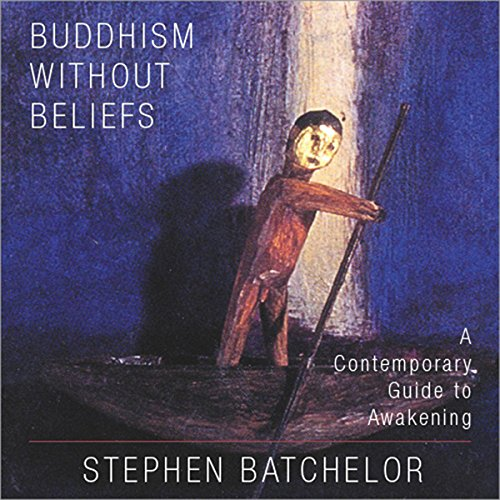
Buddhism Without Beliefs (1997): The seminal text that introduced agnostic Buddhism to a mainstream Western audience, urging readers to move beyond religious dogma.[3:10]
-
Confession of a Buddhist Atheist (2010): Part spiritual memoir, part historical investigation into the human life of Siddhartha Gautama stripped of later mythological additions.[3:11]
-
After Buddhism: Rethinking the Dharma for a Secular Age (2015): Batchelor's philosophical magnum opus, outlining the theoretical framework and ten theses of secular dharma.[3:12]
-
Secular Buddhism: Imagining the Dharma in an Uncertain World (2017): A collection of essays, lectures, and reflections examining secular practice in contemporary society.[5:5]
-
The Art of Solitude (2020): An exploration of aloneness, art, meditation, and living authentically without retreat into dogma.[3:13]
-
Buddha, Socrates, and Us: Ethical Living in Uncertain Times (2025): A comparative inquiry placing early Buddhist thought alongside Hellenistic philosophy (e.g., Socrates, Pyrrho) to explore ethics in contingent times.[7]
Reception and Scholarly Debate
While Batchelor's ideas opened the dharma to millions of secular individuals, they have drawn critique from both traditional Buddhist teachers and academic Buddhologists.[6:1]
-
Traditional Critique: Critics (such as traditional monastic scholars like Bhikkhu Bodhi or academic scholars like Donald S. Lopez Jr.) argue that removing karma and rebirth distorts the foundational structure of early Buddhism.[6:2] They contend that Batchelor projects modern Western Enlightenment values, existentialism, and secular humanism onto ancient texts.[6:3]
-
Secular Response: Batchelor responds that all historical forms of Buddhism (Tibetan, Zen, Theravada) were contingent adaptations to their respective cultural eras.[3:14] Secular Buddhism is simply the necessary modern Western adaptation to address contemporary existential realities.[3:15]
References
Counterpoint Press / Stephen Batchelor Author Profile / counterpointpress.com ↩︎
Grove Atlantic / Stephen Batchelor / groveatlantic.com ↩︎ ↩︎ ↩︎ ↩︎
Tricycle: The Buddhist Review / Stephen Batchelor Author Profile / tricycle.org ↩︎ ↩︎ ↩︎ ↩︎ ↩︎ ↩︎ ↩︎ ↩︎ ↩︎ ↩︎ ↩︎ ↩︎ ↩︎ ↩︎ ↩︎ ↩︎
Bodhi College / About Bodhi College / bodhicollege.org ↩︎
Secular Buddhist Network / Reflections on Stephen Batchelor's ELSA / secularbuddhistnetwork.org ↩︎ ↩︎ ↩︎ ↩︎ ↩︎ ↩︎
Eightfold Path / Episode 51: Secular Buddhism - A Discussion with Stephen Batchelor / eightfoldpath.com ↩︎ ↩︎ ↩︎ ↩︎
The American Scholar / The Seeker and the Sought / theamericanscholar.org ↩︎