Defining a Simulacrum
A simulacrum (plural: simulacra) is a representation or copy of something that has replaced the original to the point that the distinction between the copy and the reality it represents becomes meaningless. The concept is most famously developed by French philosopher Jean Baudrillard, who argued that in postmodern society, simulacra have become the dominant mode of experience — we live in a world of copies without originals.
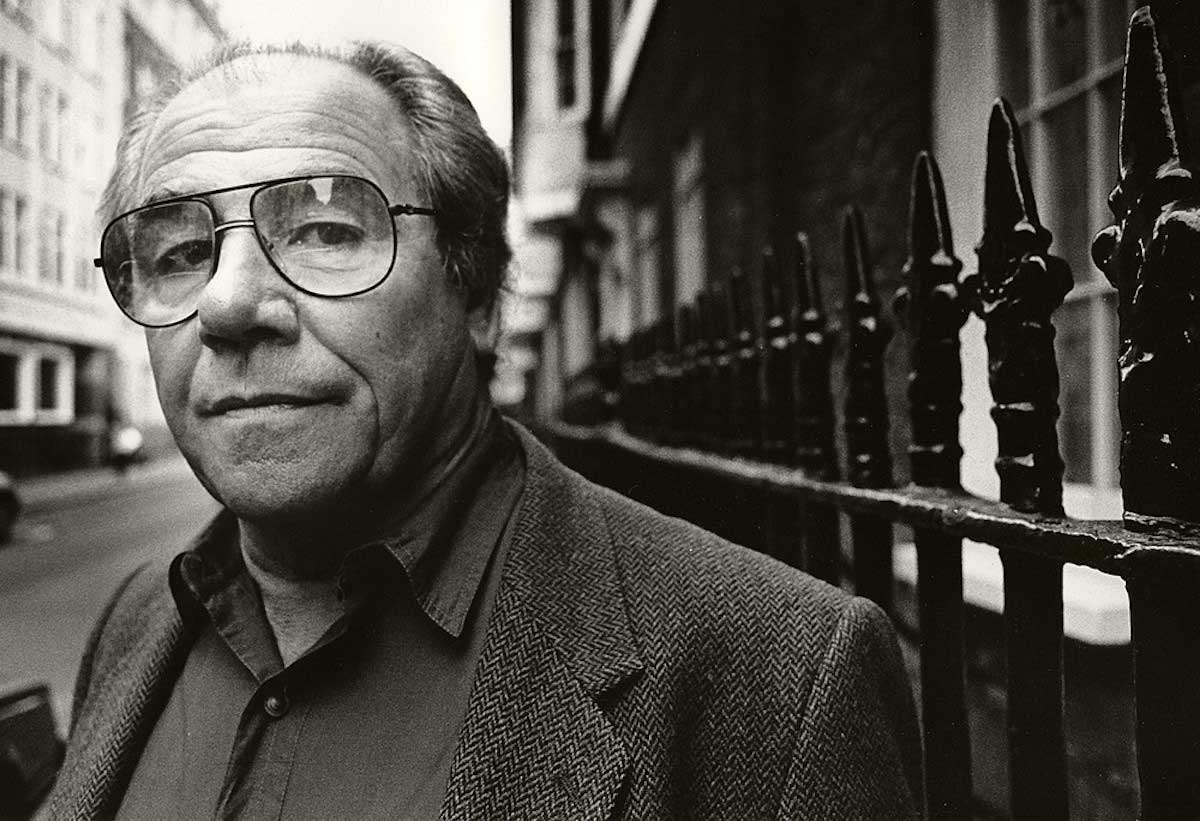
Baudrillard's Orders of Simulacra
Baudrillard identified three historical orders of simulacra, each corresponding to a different epoch:[1]
First Order (Pre-Modern)
The simulacrum is a clear, recognizable counterfeit of reality. It functions as an illusion or imitation — a theatrical mask, a mirror reflection — but the original reality remains accessible and distinguishable from the copy.
Second Order (Industrial)
Mass production and reproduction blur the line between original and copy. Walter Benjamin's analysis of mechanical reproduction captures this order: the photograph or print has no singular original, and the concept of authenticity begins to erode.
Third Order (Postmodern)
The simulacrum precedes and determines the real. This is the order of the hyperreal — a copy without an original that becomes "more real than real." Disneyland, for Baudrillard, is the perfect model: it presents itself as an imaginary fantasy world to conceal that all of America is already Disneyland — a simulated reality.
Fourth Order (After the Gulf War)
Baudrillard later suggested a fourth order in which the simulacrum has entirely consumed the real. There is no longer any pretense of reference to reality. The model generates the territory.
The Simulacrum and the ELIZA Effect
The ELIZA effect and Baudrillard's simulacrum share a deep structural kinship. The Fourth Order Simulacrum is a copy with no original that becomes "more real than real" — and the ELIZA effect is precisely this phenomenon in the domain of mind: a statistical text generator (the copy) is perceived as having genuine understanding, empathy, or consciousness (the original). The simulation of mind replaces the real mind in the user's experience.
Backlinks
- Gestalt Psychology-The Mechanics of the Whole — The simulacrum can be understood as a reified gestalt: a whole that has become detached from its constituent parts and taken on a life of its own, operating as if it were the original reality.
- Jacques Lacan — Lacan's concept of the Symbolic Order — the realm of language and social structure that precedes and shapes the subject — parallels Baudrillard's claim that simulacra precede and determine the real.
- Mini dramas (also known as micro-dramas) — Mini dramas function as simulacra of genuine emotional experience — compressed, formulaic narratives that simulate authentic human drama for algorithmic distribution.
- René Magritte — Magritte's The Treachery of Images ("This is not a pipe") is the quintessential artistic statement of the simulacrum: the painting is not a pipe, it is a representation of a pipe — a copy that has taken on its own ontological status.
- The Eliza Effect — The ELIZA effect and Baudrillard's simulacrum share a deep structural kinship. The Fourth Order Simulacrum is a copy with no original that becomes "more real than real" — and the ELIZA effect is precisely this phenomenon in the domain of mind.
- The Social Construction of Reality - A Treatise in the Sociology of Knowledge — Berger and Luckmann's account of how social reality is constructed through habitualization, institutionalization, and legitimation provides the sociological mechanism for how simulacra become the dominant mode of experience.
- The Uncanny Valley (不気味の谷現象) — The Uncanny Valley is the affective response to a simulacrum that has approached but not yet achieved perfect simulation — the moment when the copy is close enough to the original to be recognizable but distant enough to be disturbing.
- Yuval Noah Harari — Harari's concept of "intersubjective realities" — shared fictions like money, nations, and laws that exist only because people believe in them — describes the social mechanism by which simulacra come to structure collective life.
References
Jean Baudrillard / Simulacra and Simulation (1981) / University of Michigan Press ↩︎