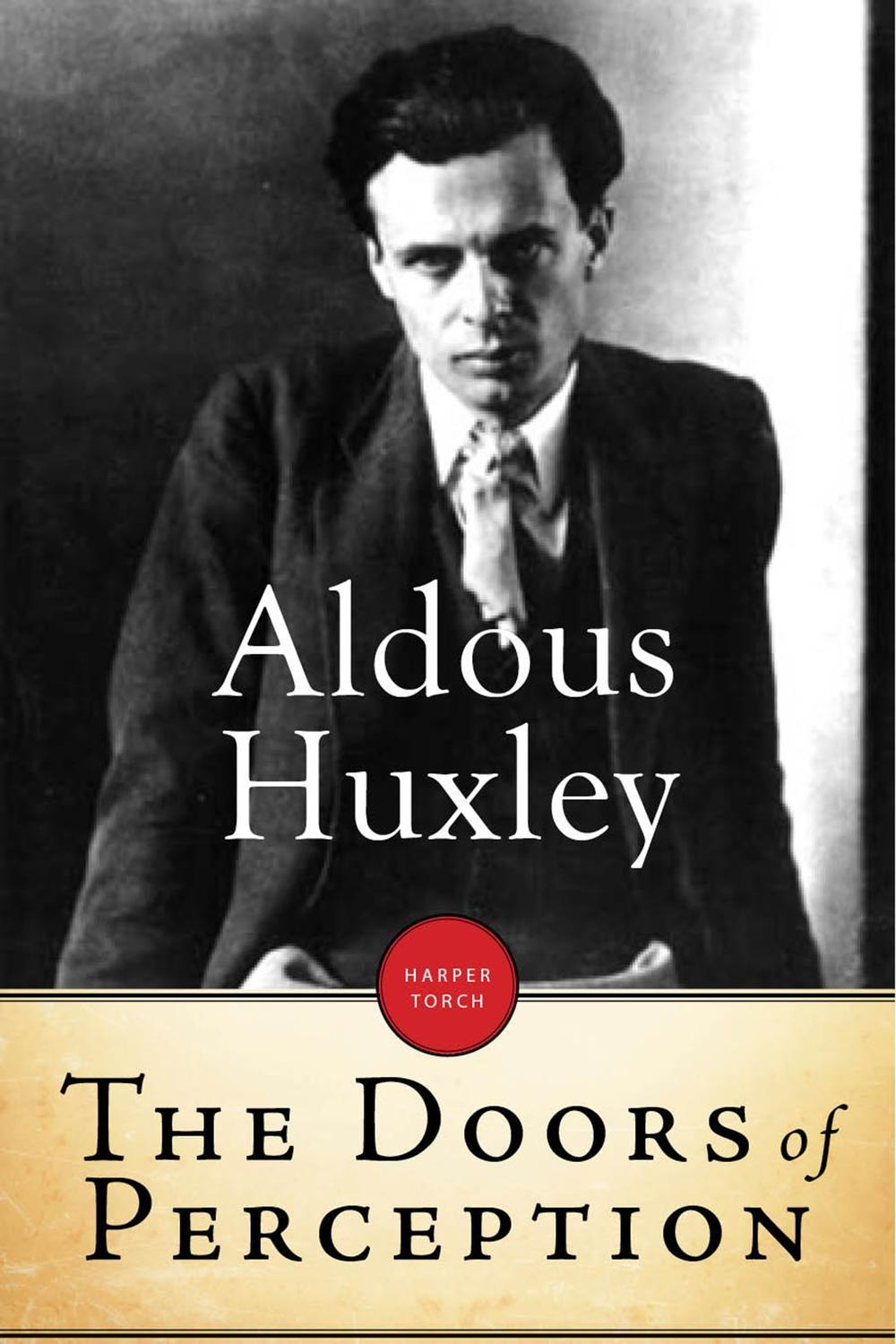
Aldous Huxley's The Doors of Perception (1954)
The Doors of Perception (1954) is Aldous Huxley's philosophical memoir of his experience taking mescaline under controlled conditions. The book introduces his influential "reducing valve" theory of the brain — the idea that the brain's primary function is to filter out the vast majority of reality (Mind at Large) so that humans can focus on biological survival. Psychedelics, Huxley argues, temporarily disable this filter, allowing a flood of unmediated reality into conscious awareness.
The Reducing Valve
Drawing on Henri Bergson's philosophy, Huxley argues that the brain and nervous system are not organs of perception but organs of elimination. Their function is to protect the organism from being overwhelmed by the infinite sea of sensory data that constitutes reality at every moment. The brain reduces this "Mind at Large" to a narrow trickle — just enough for practical survival.
When the reducing valve is temporarily impaired — by psychedelics, fasting, sensory deprivation, or mystical practice — the contents of Mind at Large flood into consciousness. What emerges is not hallucination in the psychiatric sense but hyperaesthesia: a perception of reality more intense, more detailed, and more significant than ordinary experience.
The Experience
Huxley describes his mescaline experience as a revelation of the "isness" of things — the intrinsic, non-utilitarian reality of objects freed from their practical functions. A vase of flowers becomes "a miracle of color and form." The folds of his trousers become "a labyrinth of endless significance." The experience is characterized by:
- Preternatural Light — Objects appear self-luminous, glowing from within.
- The Sacred — Ordinary things are perceived as holy, as ends in themselves rather than means.
- Ego Dissolution — The boundaries between self and world soften or disappear.
- The Rejection of Language — Words are felt as inadequate to capture the quality of direct experience.
Backlinks
- Aldous Huxley's The Perennial Philosophy — The Doors of Perception is the experiential counterpart to the philosophical framework Huxley laid out in The Perennial Philosophy: direct mystical knowledge of the divine Ground, achieved through the temporary suspension of the ego's filtering mechanisms.
- American Transcendentalism — Huxley's "reducing valve" theory resonates with the Transcendentalist belief that ordinary perception is a narrowed, utilitarian mode and that nature can open the mind to a higher, more spiritual reality.
- Bergson's Eliminative Model of Perception and Memory — Huxley explicitly draws on Bergson's philosophy of perception, which argues that the brain's function is eliminative rather than productive — it subtracts from reality rather than adding to it.
- Confirmation Bias Connections — The reducing valve metaphor provides the evolutionary layer of the vault's unified architecture of delusion: the brain evolved to filter reality for survival, not truth.
- Henri Bergson — Bergson's distinction between intellectual analysis and intuitive duration (la durée) provides the philosophical foundation for Huxley's claim that the intellect filters out the fullness of reality.
- Jack Kerouac — Kerouac's spontaneous prose and exploration of altered consciousness through jazz, drugs, and Buddhism parallel Huxley's account of the doors of perception.
- Neuroproductivity — The reducing valve theory has implications for productivity: if the brain is a filter, then productivity is not about doing more but about managing what gets through the filter.
- Perennial Philosophy — The Doors of Perception is the experiential supplement to the perennial philosophy: direct mystical knowledge of the divine Ground achieved through chemical means.
- Portmanteau (also known as a lexical blend or blend word) — The title The Doors of Perception itself is a portmanteau-like borrowing from William Blake's The Marriage of Heaven and Hell.
- The Interface Theory of Perception (ITP) — Donald Hoffman's Interface Theory of Perception is the modern evolutionary-gaming-theoretic restatement of Huxley's reducing valve: perception is an interface optimized for fitness, not for truth.
- William James and the Landscape of Eastern Thought — James's "stream of consciousness" and his account of religious experience in The Varieties of Religious Experience provide the psychological and philosophical precedent for Huxley's exploration of altered states.
- Yuval Noah Harari — Harari's concept of "intersubjective realities" — shared fictions that structure human society — extends Huxley's insight about the brain as a filter to the level of collective consciousness.